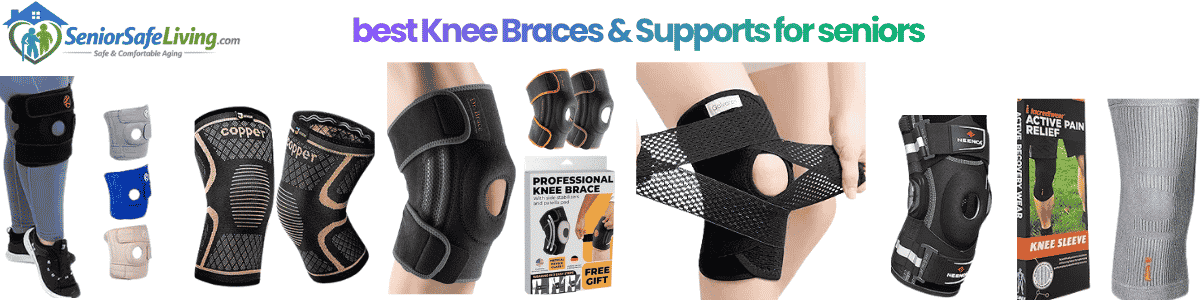
Best Knee Braces & Supports for Seniors
Best Knee Braces & Supports for Seniors: Comfort, Stability, and Pain Relief Guide
The best Knee Braces & Supports for seniors are comfortable, easy to wear, properly sized, and matched to the user’s knee problem. Seniors with arthritis, mild instability, swelling, or walking discomfort may benefit from sleeves, hinged braces, unloader braces, or patella supports depending on their needs.
Why Seniors Often Need Knee Braces and Supports
Knee pain can quietly change a senior’s entire lifestyle. A short walk to the mailbox starts feeling longer. Stairs become something to avoid. Getting up from a chair takes planning. For many older adults, the issue is not only pain—it is the loss of confidence that comes with an unstable or aching knee.
That is why a well-chosen knee brace and knee support for seniors can make a meaningful difference. A brace does not cure arthritis, rebuild cartilage, or replace medical care. But it can provide compression, warmth, alignment, side-to-side support, and a feeling of security during daily movement.
Many seniors use knee supports for common concerns such as:
- Knee osteoarthritis or age-related joint wear
- Mild swelling after walking or standing
- Weakness when climbing stairs
- Side-to-side knee wobbling
- Kneecap tracking discomfort
- Post-injury support after doctor approval
- Confidence during light exercise or errands
The key is choosing the right style. A soft sleeve may help someone with mild stiffness, while a senior with arthritis and side instability may need a knee brace with lateral support for seniors. Someone with more advanced one-sided arthritis may need an unloader brace recommended by a clinician.
Best Knee Braces & Supports for Seniors: What “Best” Really Means
The word “best” can be misleading. The best brace is not always the most expensive, thickest, or most rigid option. For seniors, the best knee support braces are the ones that solve the right problem without creating new ones.
A brace should feel supportive, not punishing. It should stay in place without cutting circulation. It should be easy enough to put on without needing another person every time. It should also match the activity: walking around the house, gardening, light workouts, physical therapy, shopping, or travel.
Senior-Friendly Features to Look For
- Easy application: Wraparound designs are often easier than tight pull-on sleeves for seniors with limited hand strength.
- Adjustable straps: Useful when swelling changes throughout the day.
- Breathable material: Helps reduce sweat, itching, and skin irritation.
- Non-slip grip: Helps the brace stay in place during walking.
- Soft edges: Important for sensitive or thin skin.
- Correct support level: Mild compression, hinged stability, patella support, or unloading pressure.
- Low-profile design: Easier to wear under loose pants.
For seniors, comfort is not a bonus. It is the reason the brace gets worn consistently. A technically strong brace that stays in a drawer is not useful. A comfortable brace that supports daily movement is far more valuable.
Knee Sleeve vs Knee Brace: Which Is Better for Seniors?
A knee sleeve and a knee brace are not the same thing, although many shoppers use the terms interchangeably. Understanding the difference helps seniors avoid buying too little—or too much—support.
Knee Sleeves
A knee sleeve is usually made of elastic, neoprene, knit fabric, or compression material. It slides over the knee and gently squeezes the joint. This can help with warmth, light swelling, and mild support.
Knee sleeves are often best for seniors who have:
- Mild knee stiffness
- Minor swelling after activity
- General discomfort during walking
- No major instability
- No recent injury requiring medical evaluation
Knee Braces
A knee brace usually provides more structure. It may include straps, hinges, stabilizers, gel rings, rigid panels, or metal supports. A brace is better when the knee needs directional control, alignment, or side stability.
A structured brace may be better for seniors who feel the knee shift, buckle, twist, or wobble. It may also help when pain comes from arthritis, ligament weakness, or kneecap tracking issues.
Simple Rule
Choose a sleeve for light compression and comfort. Choose a brace when the knee needs actual support, alignment, or stability.
Best Knee Support Braces for Seniors by Need
Different seniors need different brace designs. A 70-year-old who wants support while gardening may need something very different from a 65-year-old who still enjoys jogging. Below are the most practical categories.
Best Everyday Knee Support Brace for Seniors
For daily walking, errands, and around-the-house movement, a soft compression brace or wraparound knee support is often a smart starting point. It gives gentle stability without feeling bulky.
Look for:
- Soft breathable fabric
- Adjustable compression
- Easy wraparound closure
- Comfort behind the knee
- Flexible movement for sitting and standing
This type works well for seniors who say, “My knee feels better when it is supported, but I do not want anything heavy.”
Best Knee Cap Support Brace for Seniors
A knee cap support brace for seniors is designed to help guide or stabilize the patella, also called the kneecap. It often has a circular opening, padded ring, gel support, or tracking strap around the kneecap.
This option may help seniors who feel pain in the front of the knee, especially when climbing stairs, getting out of a car, or standing after sitting. It may also help when the kneecap feels like it does not move smoothly.
Choose a patella-support brace with soft padding and adjustable straps. Seniors should avoid designs that dig into the skin or press too hard around the kneecap.
Best Knee Brace with Metal Support for Seniors
A knee brace with metal support for seniors is usually a hinged brace. These braces often have metal or rigid side stabilizers that help reduce side-to-side movement. They are useful when a senior needs more control than a sleeve can provide.
This style may be helpful for:
- Mild to moderate instability
- Side-to-side knee weakness
- Arthritis with wobbling
- Recovery support after clinician approval
- Walking confidence on uneven ground
Metal support does not automatically mean better. It means stronger directional control. If the brace feels heavy, rubs the skin, or changes walking posture, it may not be the right fit.
Best Knee Brace with Lateral Support for Seniors
A knee brace with lateral support for seniors helps control movement on the inner and outer sides of the knee. This matters because many seniors do not simply feel pain—they feel uncertainty. The knee may shift slightly when turning, stepping off a curb, or walking on grass.
Lateral support can come from flexible stays, side stabilizers, or hinged metal supports. Seniors with noticeable buckling should speak with a healthcare provider before relying on a brace alone, because buckling can increase fall risk.
Best Knee Support Brace for Running for Seniors
Some seniors stay impressively active. They walk fast, jog lightly, play pickleball, hike, or do low-impact cardio. A knee support brace for running for seniors should be supportive but not restrictive.
For running or faster movement, look for:
- Secure anti-slip design
- Breathable compression
- Flexible side stabilizers
- Comfortable back-knee area
- Moisture control
- Enough support without changing stride
A bulky brace can change gait and cause discomfort in the hip, ankle, or lower back. Seniors who run with knee pain should consider a professional assessment, especially if pain is sharp, swelling appears, or the knee gives way.
Types of Knee Braces for Support for Seniors
When shopping for knee braces for support for seniors, the product names can feel confusing. One listing says “stabilizer,” another says “compression sleeve,” another says “arthritis brace.” Here is what those terms usually mean.
Compression Knee Supports
These provide gentle pressure and warmth. They are often lightweight and affordable. They may help with mild soreness, swelling, or stiffness. However, they do not provide strong structural support.
Wraparound Knee Braces
Wraparound braces open fully and fasten with straps. This makes them easier to put on than pull-up sleeves. They are a strong choice for seniors who have arthritis in the hands or difficulty bending down.
Hinged Knee Braces
Hinged braces provide more side support. Many include metal or rigid hinges on both sides of the knee. They are commonly used when the knee needs controlled bending and improved stability.
Patella Stabilizing Braces
These braces focus on kneecap position. They may include a hole, gel ring, or strap around the patella. They are useful for front-of-knee discomfort or kneecap tracking problems.
Unloader Knee Braces
Unloader braces are more specialized. They are often used for knee osteoarthritis affecting one side of the joint. Instead of simply compressing the knee, they aim to shift pressure away from the painful area. These braces are usually more expensive and may require professional fitting.
Open-Patella vs Closed-Patella Braces
An open-patella brace has a hole around the kneecap. Some seniors like this because it reduces pressure directly over the patella. A closed-patella brace covers the kneecap and may feel more uniform. The better choice depends on comfort and pain location.
How to Choose the Right Knee Brace and Knee Support for Seniors
Choosing a brace should start with the senior’s real-life problem, not the product description. Ask what the knee does during daily activity.
If the Knee Feels Stiff
A compression sleeve or soft wrap may be enough. Mild warmth and gentle pressure can make movement feel easier, especially in the morning or during short walks.
If the Knee Swells
Choose adjustable compression. Swelling can change during the day, so fixed tight sleeves may become uncomfortable. A wraparound brace lets the senior loosen or tighten support as needed.
If the Knee Buckles
Consider a hinged brace or lateral-support brace, but do not ignore buckling. A knee that gives way can increase fall risk. A healthcare provider or physical therapist should evaluate repeated buckling.
If Pain Is Mostly Under or Around the Kneecap
A patella support brace may help. Look for a comfortable kneecap ring, gentle alignment support, and straps that do not pinch.
If Arthritis Pain Is on One Side
An unloader brace may be appropriate, especially when pain is worse on the inner or outer side of the knee. Because these braces affect alignment and pressure, professional guidance is recommended.
If the Senior Has Sensitive Skin
Prioritize soft lining, breathable fabric, smooth seams, and easy cleaning. Seniors with diabetes, circulation problems, fragile skin, or neuropathy should be extra careful and should ask a clinician before wearing tight supports for long periods.
Fit Guide: How Seniors Can Measure for a Knee Brace
A knee brace only works well when it fits correctly. A brace that is too loose slides down and fails to support the knee. A brace that is too tight can cause numbness, tingling, skin marks, swelling, or circulation problems.
Basic Measuring Steps
- Sit or stand with the leg relaxed.
- Use a flexible measuring tape.
- Measure around the center of the kneecap.
- Measure above the knee if the brand asks for thigh size.
- Measure below the knee if the brand asks for calf size.
- Compare measurements with the brand’s size chart, not just small, medium, or large labels.
Size charts vary between brands. A large in one brace may fit like a medium in another. Seniors should avoid guessing based on clothing size.
Comfort Check After Wearing
After putting on the brace, check these signs:
- The brace feels snug but not painful.
- The foot does not tingle or become numb.
- The brace does not roll, bunch, or slide.
- The skin does not show deep red marks.
- The senior can sit, stand, and walk naturally.
If the brace causes more pain, changes skin color, or makes walking feel unsafe, remove it and seek professional advice.
Common Mistakes Seniors Make When Buying Knee Braces
A knee brace can help, but the wrong brace can frustrate the user. Many seniors give up because the first product they buy is uncomfortable or mismatched to their condition.
Buying the Strongest Brace First
More support is not always better. A heavy hinged brace may feel secure, but it may also feel bulky and tiring. Start with the level of support the knee actually needs.
Ignoring Skin Comfort
Older skin can be more sensitive. Rough seams, trapped sweat, and tight straps can irritate the skin. Breathability and soft edges matter.
Wearing the Brace Too Long Too Soon
Many seniors do better when they build up gradually. Wearing a new brace for a short period first allows the skin and body to adjust.
Using a Brace Instead of Strengthening
A brace can support the knee, but it should not replace movement, strength work, or medical guidance. Stronger thigh, hip, and calf muscles often help support the knee naturally.
Choosing Based Only on Reviews
Reviews are helpful, but every knee is different. A five-star brace for one person may be wrong for another person with a different pain pattern, leg shape, or mobility level.
Safety Tips Before Seniors Wear a Knee Brace
For most seniors, a basic knee support is low-risk when used correctly. Still, safety matters. A brace touches the skin, affects movement, and may change how the leg feels during walking.
Ask a Healthcare Provider If Any of These Apply
- Severe knee pain
- Sudden swelling
- Recent fall or injury
- Knee locking
- Repeated buckling
- Numbness or tingling
- Diabetes or circulation problems
- Open wounds or fragile skin
- Recent knee surgery
A brace should never make pain worse. It should not cause numbness, burning, or skin damage. If the knee feels less stable while wearing it, the brace may be the wrong type or wrong size.
How Long Should Seniors Wear a Knee Brace?
There is no single answer. Some seniors wear a brace only during walking, exercise, or errands. Others wear it during activities that trigger pain. A doctor or physical therapist may recommend a specific schedule for injury recovery or arthritis management.
For general support, many seniors start with short wearing periods and increase gradually if the brace feels comfortable. Taking breaks helps the skin breathe and gives the user a chance to check for irritation.
Best Materials for Senior Knee Supports
Material affects comfort more than many buyers realize. A brace can have great support but still fail if it feels hot, itchy, or stiff.
Neoprene
Neoprene provides warmth and compression. It can feel supportive, but some seniors find it too warm or sweaty. It may not be ideal for hot climates or sensitive skin.
Knitted Compression Fabric
Knit sleeves are often breathable and flexible. They work well for mild support and daily comfort. However, they may not provide enough stability for seniors with buckling or side movement.
Elastic Straps
Elastic straps allow adjustable pressure. They are useful when swelling changes. The straps should be wide enough to avoid digging into the skin.
Metal Hinges
Metal hinges provide stronger side support. They are useful for instability but can add weight. Seniors should check whether the hinges press against the leg when sitting or walking.
Gel Padding
Gel rings around the kneecap may improve comfort and patella support. The padding should feel secure without creating pressure points.
How Seniors Can Use Knee Braces with Exercise
A knee brace can support movement, but movement still matters. Many seniors become less active because of knee pain. Unfortunately, too much rest can lead to weaker muscles, more stiffness, and less confidence.
The right brace may help seniors stay active enough to maintain strength. For example, a senior might wear a light compression support during a short walk, or a hinged brace during physical therapy exercises recommended by a professional.
Brace-Friendly Activities
- Walking on flat surfaces
- Light stretching
- Chair exercises
- Physical therapy movements
- Low-impact cardio
- Gardening with breaks
- Errands and travel walking
Activities That Need Extra Caution
- Running with sharp pain
- Jumping exercises
- Heavy lifting
- Steep downhill walking
- Fast twisting sports
- Uneven hiking trails if the knee buckles
Active seniors should see the brace as part of a bigger plan: good shoes, strength exercises, balance work, pacing, and medical guidance when symptoms change.
Buying Checklist for the Best Knee Support Braces for Seniors
Before buying, use this practical checklist. It helps narrow the options quickly and avoids common mistakes.
Support Level
- Mild stiffness: compression sleeve
- Swelling: adjustable compression support
- Kneecap pain: patella support brace
- Side instability: hinged or lateral-support brace
- One-sided arthritis pain: clinician-guided unloader brace
Ease of Use
- Can the senior put it on without help?
- Are the straps easy to grip?
- Does it require pulling tightly over the foot?
- Can it be adjusted while sitting?
Comfort
- Is the fabric breathable?
- Are the edges soft?
- Does it rub behind the knee?
- Can it be worn under clothing?
Safety
- Does it stay in place?
- Does it avoid numbness or tingling?
- Does it allow natural walking?
- Is the support appropriate for the condition?
A good brace should make daily life easier. It should not become another problem to manage.
Internal Link Suggestions
To improve SEO and user engagement, add internal links to related articles on your website. Suggested anchor texts include:
External Authority References
For medical accuracy and trust, link to reputable health resources such as:
FAQs About Knee Braces and Supports for Seniors
What type of knee brace is best for elderly people with arthritis?
For mild arthritis, a compression sleeve or soft wraparound support may help with warmth and comfort. For moderate instability or one-sided arthritis pain, a hinged or unloader brace may be better. Seniors with significant arthritis should ask a healthcare provider which style fits their condition.
Can seniors wear a knee brace all day?
Some seniors can wear a brace during daily activities, but all-day use is not always necessary. It depends on the knee problem, brace type, skin condition, and medical advice. The brace should be removed if it causes numbness, skin irritation, swelling, or increased pain.
Is a knee sleeve enough for senior knee pain?
A knee sleeve may be enough for mild stiffness, warmth, and light compression. It may not be enough if the knee buckles, shifts sideways, or feels unstable. In those cases, seniors may need a more structured brace with straps, hinges, or lateral support.
Should seniors choose open-patella or closed-patella knee support?
Open-patella braces may feel better when pain is around the kneecap because they reduce direct pressure over the patella. Closed-patella supports provide more even compression. The best option depends on comfort, pain location, and how the brace feels while walking.
Can a knee brace prevent falls in seniors?
A knee brace may improve confidence and support, but it cannot guarantee fall prevention. Seniors with knee buckling, balance problems, dizziness, or repeated falls should seek medical evaluation. Good shoes, strength training, balance exercises, and home safety changes are also important.
Are knee braces with metal supports safe for seniors?
Yes, they can be safe when properly fitted and used for the right reason. A knee brace with metal support for seniors may help with side stability, but it should not rub, pinch, or restrict circulation. Seniors should choose lightweight designs and get professional advice for serious instability.
How tight should a senior’s knee brace be?
A knee brace should feel snug and secure, but not painful. It should not cause tingling, numbness, color changes, or deep skin marks. If the brace slides down, it may be too loose. If it causes discomfort or swelling, it may be too tight.
Conclusion: Choosing the Best Knee Brace for Senior Comfort and Confidence
The best Knee Braces & Supports for seniors are not one-size-fits-all. The right choice depends on the senior’s pain pattern, activity level, skin sensitivity, stability needs, and ability to put the brace on comfortably.
For mild discomfort, a breathable compression sleeve may be enough. For kneecap pain, a knee cap support brace may feel better. For side instability, a hinged knee brace with lateral support may provide more confidence. For arthritis affecting one side of the knee, a medical professional may recommend an unloader brace.
The goal is simple: help seniors move with less fear, more comfort, and better support. A knee brace should make walking, standing, errands, and light activity feel more manageable—not more complicated.
Final tip: Start with the knee problem, not the product hype. Choose comfort, fit, and safety first. When pain is severe, swelling appears suddenly, or the knee keeps buckling, get professional guidance before buying a brace.