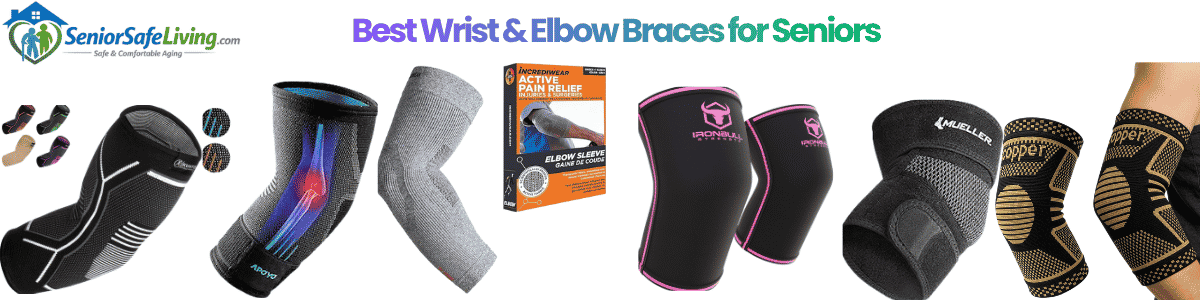
Best Wrist & Elbow Braces for Seniors
Best Wrist & Elbow Braces for Seniors: Safe Support for Pain Relief and Daily Comfort
Featured snippet answer: The Best Wrist & Elbow Braces for Seniors are lightweight, adjustable, breathable, and easy to put on. Seniors should choose wrist braces for hand and wrist stability, elbow braces for tendon support, and wrist-to-elbow braces when pain spreads through the forearm.
Why Seniors Need the Right Wrist and Elbow Brace
Wrist and elbow pain can turn simple daily tasks into frustrating moments. Opening a jar, holding a coffee mug, buttoning a shirt, gardening, typing, cooking, or even lifting a grocery bag can feel harder when the joints are sore or weak.
For seniors, the right brace is not just about compression. It is about comfort, safety, independence, and confidence. A well-chosen brace can help reduce strain, remind the joint to stay in a safer position, and make everyday movement feel more controlled.
However, not every brace is senior-friendly. Some are too tight, too stiff, too bulky, or too difficult to fasten with arthritic fingers. Others may provide support but irritate thin or sensitive skin. That is why choosing the Best Wrist & Elbow Braces for Seniors requires a slightly different approach than choosing braces for athletes or younger adults.
A senior-friendly brace should be:
- Easy to put on and remove, even with limited grip strength
- Soft against aging skin to reduce rubbing and irritation
- Adjustable for swelling that changes during the day
- Supportive without cutting circulation
- Breathable for longer wear
- Lightweight enough for daily tasks
The goal is not to freeze the arm completely. The goal is to support the painful area while still allowing safe, useful movement.
Best Wrist & Elbow Braces for Seniors: What Makes a Brace Worth Buying?
The best brace is not always the most expensive one. It is the brace that matches the senior’s condition, activity level, hand strength, skin sensitivity, and daily routine.
For example, a senior who wakes up with numbness or wrist discomfort may need a soft nighttime wrist brace that keeps the wrist in a neutral position. Someone with pain on the outside of the elbow may need a counterforce elbow strap or a tennis elbow brace. A senior with pain running from the wrist to the elbow may benefit from a longer wrist to elbow brace for Seniors that supports more of the forearm.
When choosing the best brace, focus on these features:
Adjustable straps
Adjustable straps are important because swelling can change throughout the day. A brace that feels comfortable in the morning may feel tight in the evening. Seniors should look for wide, easy-pull straps rather than tiny fasteners.
Breathable fabric
Neoprene may provide warmth and compression, but it can feel hot for some seniors. Breathable mesh, cotton-blend linings, and moisture-wicking materials may be more comfortable for long periods.
Soft edges
Stiff seams and sharp edges can rub against sensitive skin. A good senior-friendly brace should have smooth stitching and soft borders.
Correct level of support
More support is not always better. A rigid brace may help during flare-ups, but it may feel uncomfortable during cooking, writing, or light household work. A flexible brace may be better for daytime use, while a firmer brace may be better for rest or nighttime support.
Easy left-right fitting
Some braces are made for one specific hand or arm. Others are universal. Seniors and caregivers should check whether the brace fits the right wrist, left wrist, right elbow, or left elbow before buying.
Common Wrist and Elbow Problems Seniors Use Braces For
Wrist and elbow braces are used for many reasons. Some seniors need mild support during chores. Others need help managing pain from repetitive strain, arthritis, tendon irritation, or nerve-related discomfort.
Arthritis-related wrist or elbow discomfort
Arthritis can make joints feel stiff, swollen, weak, or painful. A soft compression brace may help the joint feel warmer and more stable during daily movement. Seniors with arthritis usually prefer braces that are not overly rigid because they still need to move their hands and arms throughout the day.
Tennis elbow
Tennis elbow is not limited to tennis players. Seniors can develop it from gardening, cleaning, carrying bags, using tools, or repeating gripping motions. Pain often appears on the outside of the elbow and may travel into the forearm or wrist.
For this issue, a wrist brace for tennis elbow for Seniors or a dedicated elbow strap may help reduce stress on irritated tendons during daily tasks. Some seniors benefit from using both wrist and elbow support, depending on where the pain appears.
Carpal tunnel-type wrist discomfort
Some seniors experience wrist pain, tingling, weakness, or nighttime hand discomfort. A neutral-position wrist brace may help reduce awkward bending during sleep or repetitive tasks. A brace should never be used to ignore worsening numbness or weakness, but it may be useful as part of a conservative support plan.
Sprains, strains, and overuse
A mild wrist strain from lifting, a sore elbow after yard work, or forearm fatigue from repeated gripping may improve with rest, gentle support, and avoiding the movement that caused the pain. In these cases, a brace can serve as a reminder not to overuse the joint.
Posture and grip-related strain
Sometimes wrist and elbow pain starts because the hand, wrist, and forearm are working harder than they should. Poor tool grip, heavy cookware, unsupported computer use, or repetitive phone use can trigger discomfort. A brace helps, but better ergonomics often matter just as much.
Best Types of Wrist Braces for Seniors
Wrist braces come in different styles. The right one depends on whether the senior needs light support, firm stabilization, nighttime comfort, or help with repetitive strain.
Soft compression wrist brace
A soft compression wrist brace is ideal for mild aches, arthritis stiffness, and light support during daily activities. It usually wraps around the wrist and provides gentle pressure without fully limiting movement.
Best for: mild arthritis, light wrist weakness, household tasks, and seniors who dislike bulky braces.
Wrist brace with removable splint
This type includes a metal or plastic support that helps keep the wrist in a more neutral position. It is often useful when the wrist needs more stability, especially during rest or sleep.
Best for: nighttime wrist support, carpal tunnel-type discomfort, sprains, and flare-ups.
Thumb-and-wrist brace
A thumb-and-wrist brace supports both the wrist and thumb. Seniors with pain near the base of the thumb may find this helpful, especially when gripping objects or opening containers.
Best for: thumb arthritis, wrist-thumb strain, gripping pain, and kitchen tasks.
Wraparound wrist brace
A wraparound brace is often easier to put on because it uses simple straps instead of complicated sleeves. This is a good option for seniors who have limited finger strength.
Best for: seniors who need quick application, adjustable compression, and daytime comfort.
Night wrist brace
Night braces are usually softer and more padded than daytime braces. They are designed to reduce bending while sleeping without feeling sharp or restrictive.
Best for: seniors who wake up with wrist pain, tingling, or hand discomfort.
Best Types of Elbow Braces for Seniors
Elbow braces support the tendons, muscles, and joint area around the elbow. Some provide compression, while others apply targeted pressure to reduce strain during movement.
Tennis elbow strap
A tennis elbow strap, also called a counterforce brace, sits below the elbow on the upper forearm. It applies pressure to the forearm muscles and may reduce stress on the painful tendon area.
This is one of the most common choices for seniors looking for a tennis elbow wrist brace for Seniors solution, although technically the strap supports the forearm near the elbow rather than the wrist itself.
Best for: pain on the outside of the elbow, gripping discomfort, gardening, light lifting, and repetitive hand use.
Compression elbow sleeve
An elbow sleeve provides gentle compression around the joint. It can feel comforting for seniors with stiffness, mild swelling, or general elbow soreness.
Best for: mild arthritis, warmth, light support, and low-impact daily activities.
Hinged elbow brace
A hinged elbow brace offers stronger support and controlled movement. It is usually bulkier and may not be necessary for mild pain. Seniors should use this type only when stronger stabilization is needed or recommended by a healthcare professional.
Best for: more serious instability, recovery support, or medically guided use.
Elbow brace with gel pad
Some tennis elbow braces include a gel pad that applies pressure more comfortably. This can be helpful for seniors who need targeted support but dislike hard pressure points.
Best for: tender forearm muscles, tennis elbow symptoms, and seniors with sensitive skin.
Wrist Brace for Tennis Elbow for Seniors: Does It Really Help?
Many people are surprised to learn that the wrist can affect elbow pain. The muscles involved in gripping and extending the wrist connect through the forearm and attach near the elbow. When those tendons are irritated, repeated wrist movement can keep pulling on the painful area.
That is why a wrist brace for tennis elbow for Seniors may help in some cases. By limiting excessive wrist motion, the brace may reduce the workload on the forearm muscles connected to the elbow.
A wrist brace may be especially helpful when elbow pain becomes worse during:
- Opening jars
- Holding a frying pan
- Using a screwdriver
- Carrying grocery bags
- Typing for long periods
- Gardening or pruning
- Knitting or crafting
However, a wrist brace is not always enough by itself. Many seniors with tennis elbow need a combination of rest, better lifting habits, gentle stretching, activity modification, and sometimes physical therapy.
If pain is directly on the outside of the elbow, an elbow strap may feel more targeted. If pain spreads down the forearm toward the wrist, a wrist brace may be useful. If both areas hurt, a healthcare provider may recommend a combined support strategy.
Wrist to Elbow Brace for Seniors: When Full Forearm Support Makes Sense
A wrist to elbow brace for Seniors covers more area than a standard wrist brace or elbow strap. It may support the wrist, forearm, and sometimes part of the elbow. This type can be useful when pain is not limited to one small spot.
Full forearm support may make sense when a senior has:
- Pain that travels from the elbow toward the wrist
- Forearm muscle strain
- Weak grip caused by overuse
- Combined wrist and elbow discomfort
- Difficulty keeping the wrist neutral during tasks
- Need for extra support during recovery
The advantage is wider support. The drawback is reduced flexibility. A longer brace may make it harder to wash dishes, cook, type, or dress. For that reason, seniors should choose a wrist-to-elbow design only when the extra coverage is truly useful.
Look for a design with breathable fabric, soft lining, adjustable straps, and a shape that does not dig into the elbow crease. Seniors should be able to bend the arm comfortably unless the brace is specifically designed to limit motion.
Best Wrist Brace for Tennis Elbow for Seniors: Features to Look For
The best wrist brace for tennis elbow for Seniors should reduce unnecessary wrist movement without making the hand useless. Seniors still need to eat, dress, write, hold a phone, and move safely around the home.
Here are the most important features:
Neutral wrist support
The brace should help keep the wrist from bending too far forward or backward. A neutral position may reduce pulling through the forearm muscles.
Comfortable palm design
Some braces have thick material across the palm that makes gripping awkward. Seniors should look for a low-profile palm area if they plan to wear the brace during daytime tasks.
Easy fastening system
Wide hook-and-loop straps are usually easier than small buckles. Pull tabs are helpful for seniors with arthritis or reduced dexterity.
Removable splint
A removable splint allows the brace to shift from firm support to softer support. This gives seniors more flexibility as symptoms improve.
Breathable material
A brace that traps heat may become uncomfortable quickly. Seniors who wear a brace for several hours should choose breathable fabric.
Correct sizing
A brace that is too small can restrict circulation. A brace that is too large can slide around and fail to support the wrist. Measure the wrist according to the manufacturer’s sizing guide before buying.
Tennis Elbow Wrist Brace for Seniors vs Elbow Strap: Which Is Better?
Both options can be useful, but they work differently. A tennis elbow wrist brace for Seniors supports the wrist and may reduce the movement that stresses the forearm. An elbow strap applies pressure near the painful tendon area to reduce strain during gripping.
Here is a simple comparison:
| Brace Type | Best For | Senior-Friendly Benefit |
|---|---|---|
| Wrist brace | Pain triggered by wrist movement, gripping, or nighttime bending | Stabilizes the wrist and may reduce forearm strain |
| Elbow strap | Pain on the outside of the elbow during gripping or lifting | Small, lightweight, and easy to wear during activities |
| Elbow sleeve | Mild stiffness, warmth, and general elbow support | Soft compression with less targeted pressure |
| Wrist-to-elbow brace | Forearm-wide discomfort or combined wrist and elbow pain | Provides broader support across the arm |
For many seniors, the best choice depends on the pain pattern. If the pain is sharp and localized near the outside of the elbow, an elbow strap may be the first option to try. If wrist movement makes elbow pain worse, a wrist brace may be more helpful. If both areas hurt, a combination approach may work better under professional guidance.
How Seniors Should Wear Wrist and Elbow Braces Safely
A brace should feel supportive, not painful. Seniors should never wear a brace so tightly that it causes numbness, tingling, cold fingers, blue skin, or increased swelling.
Use these safety tips:
- Start with short wear periods. Try the brace for 20 to 30 minutes first.
- Check the skin often. Look for redness, rubbing, pressure marks, or irritation.
- Avoid sleeping in a brace unless it is designed for night use.
- Do not overtighten straps. Support should be snug, not restrictive.
- Remove the brace during bathing. Wet fabric can irritate skin.
- Keep the brace clean. Sweat and dust can cause itching or odor.
- Take movement breaks. Gentle movement helps prevent stiffness unless a doctor says otherwise.
Caregivers should pay close attention if the senior has diabetes, circulation problems, fragile skin, or reduced sensation in the hands. These conditions can make it harder to notice pressure or irritation early.
How to Choose the Correct Size and Fit
Fit is one of the most important parts of choosing a brace. A poorly fitted brace can cause more problems than it solves.
Before buying, measure the wrist or elbow with a soft tape measure. If the senior is between sizes, check the product instructions. Some brands recommend sizing up for comfort, while others recommend sizing down for stronger compression.
A good fit should feel:
- Snug but not tight
- Stable without sliding
- Comfortable after several minutes
- Supportive during light movement
- Free of pinching or rubbing
After putting on the brace, check the fingers. They should remain warm and normal in color. The senior should be able to gently move the fingers without pain or numbness.
For elbow straps, placement matters. The strap usually sits slightly below the elbow on the upper forearm, not directly over the elbow joint. If it is placed incorrectly, it may not help and may feel uncomfortable.
Daily Activities Where Braces Can Help Seniors
The right brace can make daily routines feel safer and less painful. It can also remind seniors to slow down and avoid movements that trigger flare-ups.
Common activities where wrist and elbow braces may help include:
- Cooking and stirring
- Carrying light grocery bags
- Holding a book or tablet
- Typing or using a mouse
- Gardening
- Cleaning counters
- Knitting, sewing, or crafting
- Using walking aids carefully
- Opening doors or containers
That said, a brace should not encourage overuse. If the brace makes pain feel better, seniors may be tempted to do too much too soon. The smarter approach is to use the brace as support while also reducing repetitive strain.
For example, instead of wearing a brace and carrying a heavy laundry basket, use a rolling cart. Instead of gripping a thin-handled tool, use a padded ergonomic handle. Instead of opening a tight jar by force, use a jar opener. Small changes can protect the wrist and elbow more effectively than a brace alone.
When Seniors Should Talk to a Doctor Before Using a Brace
Most mild wrist and elbow aches can be managed with rest, gentle support, and activity changes. But some symptoms need medical attention.
Seniors should talk to a healthcare provider if they have:
- Severe pain after a fall or injury
- Swelling that does not improve
- Numbness, tingling, or weakness that gets worse
- Loss of grip strength
- Pain that lasts more than a few weeks
- Redness, warmth, or signs of infection
- Visible deformity in the wrist, hand, or elbow
- Pain that wakes them up repeatedly
A brace can be helpful, but it should not replace diagnosis. Wrist and elbow pain can come from tendons, nerves, joints, bones, or circulation issues. Seniors deserve the right treatment, not guesswork.
Care and Cleaning Tips for Senior-Friendly Braces
A brace that is worn often should be cleaned regularly. Sweat, lotion, dust, and skin oils can build up inside the fabric. This may cause odor, itching, or irritation.
Basic care tips include:
- Check the label before washing
- Remove metal splints if the instructions allow it
- Hand wash with mild soap when possible
- Air dry completely before wearing again
- Avoid high heat unless the label says it is safe
- Inspect straps for loss of grip
- Replace the brace if it becomes stretched or worn out
Seniors with sensitive skin may also wear a thin cotton sleeve underneath some braces, as long as it does not make the brace too tight. The goal is to reduce friction while keeping support effective.
Suggested Internal Links
To improve topical authority and SEO performance, add internal links from this article to related pages on your website. Suggested internal link topics include:
External Authority References
For medical context and reader trust, you may reference respected health sources such as:
Seniors should not wear a wrist brace all day unless a healthcare provider recommends it. Long wear may cause stiffness or skin irritation. It is usually better to wear the brace during painful activities or at night if it is designed for sleep.
Is an elbow brace good for arthritis pain?
A soft elbow sleeve may help seniors with mild arthritis feel warmth, compression, and support. However, arthritis pain varies, so the brace should be comfortable and should not increase swelling or stiffness.
What is the best brace for tennis elbow in seniors?
The best brace for tennis elbow in seniors is usually a lightweight elbow strap or a supportive wrist brace, depending on where the pain starts. If wrist movement worsens elbow pain, a wrist brace may help reduce strain through the forearm.
Should a wrist brace feel tight?
A wrist brace should feel snug, not tight. Fingers should stay warm and normal in color. If the brace causes numbness, tingling, coldness, or increased pain, it should be loosened or removed.
Can a wrist-to-elbow brace help forearm pain?
A wrist-to-elbow brace may help when discomfort spreads through the forearm or when both the wrist and elbow need support. It may be too restrictive for some daily tasks, so seniors should choose breathable and adjustable designs.
Do seniors need a doctor’s prescription for a wrist or elbow brace?
Many basic braces are available without a prescription. However, seniors should speak with a healthcare provider if pain is severe, caused by a fall, associated with numbness, or not improving after rest and support.
Can braces make wrist or elbow pain worse?
Yes, a brace can worsen discomfort if it is too tight, poorly fitted, worn too long, or used for the wrong condition. Seniors should monitor skin, circulation, and pain levels while wearing any brace.
Conclusion: Choosing the Best Wrist & Elbow Braces for Seniors
The Best Wrist & Elbow Braces for Seniors are not just supportive; they are comfortable, adjustable, breathable, and easy to use. A senior-friendly brace should protect the painful area without making daily life harder.
For mild wrist pain, a soft compression brace may be enough. For nighttime discomfort or carpal tunnel-type symptoms, a neutral wrist brace may be more useful. For tennis elbow, an elbow strap, wrist brace, or combined support approach may help depending on where the pain travels. For broader forearm discomfort, a wrist to elbow brace for Seniors may offer extra coverage.
The most important rule is simple: choose the brace that matches the person, not just the condition. Consider skin sensitivity, hand strength, swelling, comfort, and the activities the senior wants to keep doing. When the right brace is paired with rest, better movement habits, and professional guidance when needed, it can help seniors stay more comfortable, active, and independent.
Final CTA: Before buying, measure carefully, check the return policy, choose senior-friendly materials, and start with short wear periods. A brace should support your life, not limit it.