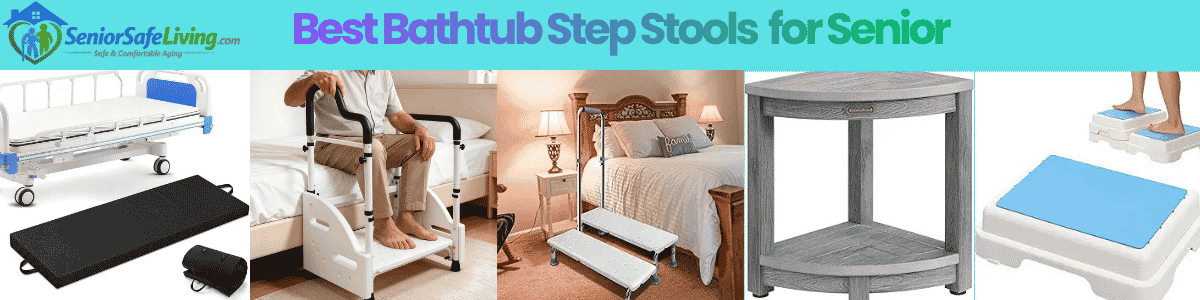
Best Bathtub Step Stools for Senior
Best Bathtub Step Stools for Senior: Safer Tub Entry and Confident Bathing
The Best Bathtub Step Stools for Senior safety help older adults step into and out of a bathtub with less strain. A good stool should be low, wide, stable, non-slip, easy to clean, and used with grab bars for better balance and safer bathroom movement.
For many seniors, the bathtub is one of the hardest parts of the home to manage. The tub wall may feel too high. The bathroom floor may be wet. One leg has to lift while the other leg supports the body. If balance, strength, or vision has changed with age, that simple movement can feel risky.
A bathtub step stool for Senior bathroom safety can make tub entry easier by creating a lower intermediate step. Instead of lifting one foot all the way over the bathtub wall from the floor, the senior steps onto a stable platform first. This can reduce effort and improve confidence.
But a bathtub step stool is not the right solution for every older adult. If the senior has serious balance problems, dizziness, weak legs, recent falls, or difficulty following safe steps, a transfer bench or walk-in shower may be safer. The goal is not just to buy a product. The goal is to choose the safest bathroom setup for the person using it.
This guide explains how to choose the best bathtub step stool, what safety features matter, when to avoid a step stool, how to place it, and how to combine it with other bathroom fall-prevention tools.
Why the Best Bathtub Step Stools for Senior Safety Matter
Bathroom safety matters because bathing combines several risk factors at once: water, soap, smooth surfaces, tight space, lifting one leg, turning the body, and stepping over an edge. For younger adults, this movement may feel automatic. For seniors, it can require focus, strength, and balance.
The Best Bathtub Step Stools for Senior use are designed to reduce the challenge of stepping over a bathtub wall. They do not eliminate risk, but they can make the movement smaller and more controlled.
A bathtub step stool may help seniors who:
- Have difficulty lifting one leg high enough to clear the bathtub wall
- Feel nervous stepping directly from the floor into the tub
- Need a lower step before entering or exiting
- Have mild stiffness in the hips, knees, or back
- Use grab bars and can stand steadily
- Want to maintain more independence while bathing
For caregivers, a good step stool can reduce worry. It gives the senior a more predictable place to step. It may also reduce the awkward “one big step” that often causes hesitation.
However, it must be chosen carefully. A stool that slides, wobbles, feels too narrow, or sits too high can increase danger instead of reducing it.
How a Bathtub Step Stool for Senior Bathroom Safety Works
A bathtub step stool for Senior use is a small platform placed outside the tub, beside the bathtub wall. The senior steps onto the stool, holds a stable grab bar, then steps over the tub wall into the bathtub or shower area.
The main purpose is to reduce the height difference between the bathroom floor and the tub edge. This helps seniors who cannot comfortably raise a leg high from floor level.
Most senior-friendly bathtub step stools include:
- A wide stepping surface
- Textured non-slip top
- Rubber feet or anti-skid base
- Strong weight capacity
- Low step height
- Water-resistant material
- Easy-clean design
Some models are stackable, meaning one step can be placed on another to increase height. This may sound convenient, but seniors usually need caution with extra height. A taller step can feel less stable and may increase the risk of imbalance.
What a Bathtub Step Stool Can Do
A bathtub step stool can make the step into the tub feel lower. It can provide a more stable platform than balancing from the floor. It can also help seniors feel more confident when entering the bath area.
What a Bathtub Step Stool Cannot Do
A step stool cannot replace grab bars. It cannot support the upper body. It cannot fix dizziness, poor balance, slippery floors, or weak legs. It should not be treated as a complete bathroom safety solution.
For seniors with higher fall risk, a transfer bench may be safer because it lets the person sit first and then move the legs into the tub.
Step Stool for Bathtub for Senior Use: When It Helps and When It Does Not
A step stool for bathtub for Senior use can be helpful in the right situation. But families should think carefully before buying one.
When a Bathtub Step Stool May Help
A step stool may work well if the senior can stand steadily, follow safe steps, hold grab bars, and lift each leg with control. It is often useful for seniors who have mild mobility difficulty but still have decent balance.
It may also help after minor stiffness, mild arthritis, or general age-related weakness, as long as the person does not become dizzy or unstable while stepping.
When a Bathtub Step Stool May Not Be Safe
A step stool may not be safe if the senior:
- Has had recent falls
- Feels dizzy when standing or turning
- Cannot safely lift one leg at a time
- Has poor balance
- Has severe leg weakness
- Cannot understand or remember safe use
- Uses a walker but has no secure grab bars near the tub
- Rushes or becomes anxious during bathing
In these situations, a tub transfer bench, shower chair, caregiver assistance, or walk-in shower may be safer.
The Most Important Question
Before buying, ask: “Will this stool make the movement safer, or will it add another thing to step on?”
If the stool creates more complexity, it may not be the best choice. If it lowers the step and gives the senior a stable intermediate platform, it may help.
Key Features of the Best Bathtub Step Stools for Senior Bathrooms
The best bathtub step stools are built for stability, grip, and simplicity. Avoid stools that look decorative but lack safety features.
Wide Non-Slip Platform
A senior-friendly stool should have a wide surface for the foot. Narrow stools require more precise foot placement, which can be difficult for seniors with low vision, neuropathy, or balance concerns.
The top should have a textured surface that feels secure under wet feet. Raised dots, ridges, or rubberized grip patterns can help reduce slipping.
Low Step Height
A lower step is usually safer than a tall one. The purpose is to reduce the bathtub wall height, not create a high platform.
Many seniors feel more stable with a low, broad step because it requires less balance and less leg lift.
Anti-Skid Rubber Feet
The bottom of the stool should grip the bathroom floor. Rubber feet help prevent sliding on tile, vinyl, or wet surfaces.
Before use, test the stool on the exact bathroom floor. If it shifts when pushed gently, it is not safe enough.
Strong Weight Capacity
Always check the manufacturer’s weight capacity. The stool should comfortably support the user’s weight with a safety margin.
Do not use a general household step stool unless it is stable, water-resistant, and appropriate for bathroom use.
Water-Resistant Material
Bathrooms are humid and wet. A bathtub step stool should resist water damage, rust, swelling, cracking, and mold buildup.
Plastic, medical-grade materials, and rust-resistant components are common choices.
Easy-to-Clean Design
Soap, water, lotion, and dust can make surfaces slippery. Choose a stool that is easy to wipe, rinse, and dry.
A complicated shape with deep grooves may trap grime and become harder to maintain.
Bright or High-Contrast Color
For seniors with low vision, contrast matters. A white stool on a white tile floor may be hard to see. A contrasting color can make the step easier to identify.
Best Types of Bathtub Step Stool for Senior Needs
Different seniors need different designs. The best choice depends on the person’s balance, bathroom layout, tub height, and comfort level.
Basic Non-Slip Bathtub Step Stool
This is the most common type. It has a single low platform, textured top, and rubber feet. It works best for seniors who only need a modest height reduction and can stand steadily.
It is simple, affordable, and easy to move for cleaning.
Wide Platform Bathtub Step Stool
A wide platform offers more foot space. This can be helpful for seniors who feel nervous with narrow steps or need more room to position the foot.
For many elderly users, wider is better than taller.
Stackable Bathtub Step Stool
Stackable stools allow height adjustment by adding layers. This can be useful when one step is too low, but it must be used carefully.
Too much height can increase instability. If using a stackable model, test it thoroughly and avoid creating a tall step that feels like climbing.
Bathtub Step Stool With Handle
Some stools include a built-in handle or side support. This may help some users, but it should not replace wall-mounted grab bars.
Built-in handles must feel strong and stable. If the handle wobbles or the whole stool moves when pulled, it may be unsafe.
Medical Bath Step
A medical bath step is often designed specifically for bathroom assistance. These usually focus on non-slip surfaces, stable feet, and easy cleaning.
For senior safety, medical-style bath steps are often more practical than decorative household stools.
Bathtub Step Stool vs Transfer Bench: Which Is Better for Seniors?
A bathtub step stool and a transfer bench solve different problems. Choosing the wrong one can make bathing less safe.
When a Step Stool Makes Sense
A step stool may be enough if the senior is steady, can stand confidently, can lift each leg, and only needs help reducing tub wall height.
It works best when combined with grab bars and a non-slip tub surface.
When a Transfer Bench Is Safer
A transfer bench is often safer if the senior has poor balance, weak legs, dizziness, fear of falling, or difficulty standing while stepping over the tub wall.
With a transfer bench, the person sits outside the tub first, then slides or moves across the bench and lifts legs over the tub wall while seated. This reduces the need to balance on one leg.
How to Decide
If the senior can safely stand and step with support, a stool may help. If the senior struggles to balance while stepping, a transfer bench may be better.
When in doubt, ask a doctor, physical therapist, occupational therapist, or home safety professional for advice. Bathroom falls can have serious consequences, so caution is wise.
How to Place a Step Stool for Bathtub for Senior Safety
Placement matters as much as product quality. A good stool in the wrong position can still be unsafe.
Place It on a Flat, Dry Surface
The stool should sit flat on the bathroom floor. Avoid placing it partly on a rug, uneven tile, drain slope, or raised threshold.
Before bathing, dry the area where the stool will sit. Wet floors can reduce grip.
Align It With the Entry Point
Place the stool where the senior naturally steps over the tub wall. Do not force the user to twist awkwardly.
The safest position is usually near the strongest grab bar and the easiest entry point.
Keep It Away From Loose Rugs
Loose bath rugs can slide or bunch up around the stool. Use a low-profile non-slip bath mat outside the tub, but do not let it interfere with the stool feet.
Check the Stool Before Every Use
Before each bath or shower, check that the stool is stable. Press down gently. Try a small side push. Make sure it does not rock or slide.
Keep the Area Clear
Remove shampoo bottles, towels, laundry, cords, and clutter from the floor. The senior should not need to step around objects while entering the tub.
Bathroom Safety Tools to Use With Bathtub Step Stools
A bathtub step stool should be part of a complete safety setup. It is not enough by itself.
Grab Bars
Grab bars are one of the most important bathroom safety tools. They provide stable hand support during entry, exit, standing, and turning.
Use properly installed grab bars near the tub entrance and inside the bathing area. Do not rely on towel bars because they are not designed to hold body weight.
Non-Slip Shower Mat
A non-slip shower mat inside the tub helps improve foot traction while bathing. Choose one that stays in place, drains well, and does not curl.
Non-Slip Bath Mat Outside the Tub
The floor outside the tub can become wet during exit. A non-slip bath mat helps absorb water and reduce slipping.
Make sure it lies flat and does not interfere with the step stool.
Handheld Shower Head
A handheld shower head lets seniors rinse while seated or standing without turning as much. This can reduce awkward movement.
Shower Chair
A shower chair helps seniors bathe while seated. It is useful for fatigue, weakness, dizziness, or poor standing endurance.
Good Bathroom Lighting
Poor lighting makes it harder to see the step, tub wall, floor, and wet areas. Use bright, even bathroom lighting and consider motion sensor night lights for nighttime bathroom trips.
Common Mistakes to Avoid When Buying Bathtub Step Stools
Many families buy a step stool quickly and assume it will solve the problem. To keep seniors safer, avoid these mistakes.
Choosing a Stool That Is Too Tall
A tall stool may reduce the tub wall height, but it also creates a higher climb from the floor. For seniors, low and stable is usually better than tall and narrow.
Ignoring Platform Width
A narrow stool requires accurate foot placement. Seniors with low vision, neuropathy, or balance concerns need more room.
Using a Regular Household Stool
Not all step stools are safe for bathrooms. A kitchen stool or decorative stool may slide, absorb water, rust, or become unstable.
Skipping Grab Bars
A stool supports the feet. It does not support the body. Seniors need a secure place to hold while stepping.
Placing the Stool on a Rug
A stool on top of a rug may shift. Place it on a flat, stable bathroom floor.
Forgetting to Test It Wet
Bathrooms are wet environments. Test the stool in realistic conditions before trusting it.
Best Bathtub Step Stools for Senior Users With Arthritis
Arthritis can affect knees, hips, hands, and back. A senior with arthritis may struggle to lift the leg high enough to clear a tub wall or may feel pain when twisting.
For arthritis, look for:
- Low step height
- Wide platform
- Non-slip textured top
- Stable rubber feet
- Easy-clean surface
- High-contrast color
- Nearby grab bars for hand support
If arthritis is severe, a transfer bench may reduce strain better than a stool because the senior can sit before moving into the tub.
Best Bathtub Step Stools for Senior Users With Low Vision
Low vision makes bathroom safety more complicated. A senior must clearly see the stool, tub edge, floor, and grab bar.
Choose a step stool that contrasts with the bathroom floor. For example, a dark gray stool on white tile may be easier to see than a white stool on a white floor.
Also consider:
- Bright bathroom lighting
- Motion sensor night lights
- High-contrast non-slip mats
- Clear labels on hot and cold controls
- Consistent placement of toiletries
- Clutter-free floors
For low vision users, visibility is part of safety. The stool should not blend into the background.
Caregiver Checklist Before a Senior Uses a Bathtub Step Stool
Before the senior uses the stool alone, caregivers should test the full bathing process. Watch the movement carefully and look for hesitation, wobbling, twisting, or uncertainty.
Check the Bathroom Setup
- Is the floor dry where the stool sits?
- Does the stool rest flat?
- Are grab bars installed near the entry point?
- Is the tub floor non-slip?
- Is the outside bath mat secure?
- Is lighting bright enough?
- Are toiletries within easy reach?
Watch the Step Sequence
The senior should move slowly and calmly:
- Stand close to the stool.
- Hold a grab bar.
- Step onto the stool with control.
- Pause and balance.
- Step over the tub wall.
- Place the foot securely inside the tub.
- Bring the other foot in slowly.
If the senior cannot complete this without wobbling, the stool may not be the safest option.
Buying Checklist for the Best Bathtub Step Stools for Senior Homes
Use this checklist before buying:
- Does the stool have a wide, non-slip platform?
- Is the step height low and manageable?
- Does it have anti-skid rubber feet?
- Does it support the senior’s weight safely?
- Is it water-resistant?
- Is it easy to clean and dry?
- Will it fit beside the bathtub?
- Does it work with the bathroom floor surface?
- Does it contrast with the floor for visibility?
- Can it be used with nearby grab bars?
- Does it stay stable when gently pushed?
- Does it make tub entry simpler rather than more complicated?
The best choice is not the most decorative stool. It is the one that helps the senior enter and exit the tub with more stability and less fear.
Internal Link Suggestions
To improve SEO and help readers continue learning, add internal links to related senior bathroom safety articles:
- Best Non-Slip Shower Mats for Elderly
- Grab Bars for Elderly Bathroom Safety
- Shower Chairs for Seniors
- Bathroom Safety Products for Seniors
- Motion Sensor Night Lights for Seniors
- Fall Prevention Products for Seniors
- Aging in Place Home Safety Checklist
External Authority References
For stronger E-E-A-T and trust signals, you can reference official senior safety and bathroom fall-prevention resources:
- CDC STEADI Check for Safety: Home Fall Prevention Checklist PDF
- CDC STEADI Patient and Caregiver Resources
- National Institute on Aging: Preventing Falls at Home Room by Room
- MedlinePlus: Bathroom Safety for Adults
FAQ About Bathtub Step Stools for Seniors
Are bathtub step stools safe for seniors?
Bathtub step stools can be safe for some seniors when they are wide, stable, non-slip, low, and used with grab bars. They may not be safe for seniors with serious balance problems, dizziness, weak legs, or recent falls.
What is the best height for a bathtub step stool?
The best height is usually low enough to reduce the bathtub wall step without creating a high climb from the bathroom floor. Many seniors are safer with a low, wide step instead of a tall stool.
Should a senior use a bathtub step stool with grab bars?
Yes. A bathtub step stool should ideally be used with properly installed grab bars. The stool supports the feet, while grab bars provide hand support during entry and exit.
Is a step stool for bathtub use better than a transfer bench?
A step stool may be better for seniors who are steady and only need a lower step. A transfer bench is often safer for seniors with poor balance, weak legs, dizziness, or difficulty lifting one leg over the tub wall.
What features should I look for in a bathtub step stool for Senior safety?
Look for a wide non-slip platform, anti-skid rubber feet, sturdy construction, proper weight capacity, low step height, water-resistant material, easy cleaning, and high-contrast color if the senior has low vision.
Can a bathtub step stool prevent bathroom falls?
A bathtub step stool may help reduce fall risk by lowering the step into the tub, but it cannot prevent all falls. It should be combined with grab bars, non-slip mats, good lighting, and clear bathroom floors.
Can seniors use a regular step stool in the bathroom?
It is better to use a step stool designed for bathroom or medical-style use. Regular household stools may slide, rust, absorb water, or lack the non-slip surface needed for wet environments.
When should a senior avoid using a bathtub step stool?
A senior should avoid using a bathtub step stool if they feel dizzy, cannot stand steadily, have recent falls, cannot lift one leg safely, or become confused during bathing. A transfer bench or caregiver-assisted bathing may be safer.
Conclusion
The Best Bathtub Step Stools for Senior safety can make bathtub entry easier by reducing the height an older adult must step over. The right stool should be wide, low, stable, non-slip, water-resistant, easy to clean, and clearly visible.
But a bathtub step stool is not a complete safety solution. It should be used with properly installed grab bars, non-slip shower mats, good lighting, and a clutter-free bathroom. For seniors with poor balance, weak legs, dizziness, or recent falls, a transfer bench may be a safer choice.
Before buying, look at the senior’s actual bathroom, tub height, balance, leg strength, and confidence level. Then choose the tool that makes the bathing routine simpler, not more complicated.
Final tip: Test the full tub entry and exit process before the senior uses the stool alone. A safe bathroom setup should feel steady, predictable, and comfortable every time.