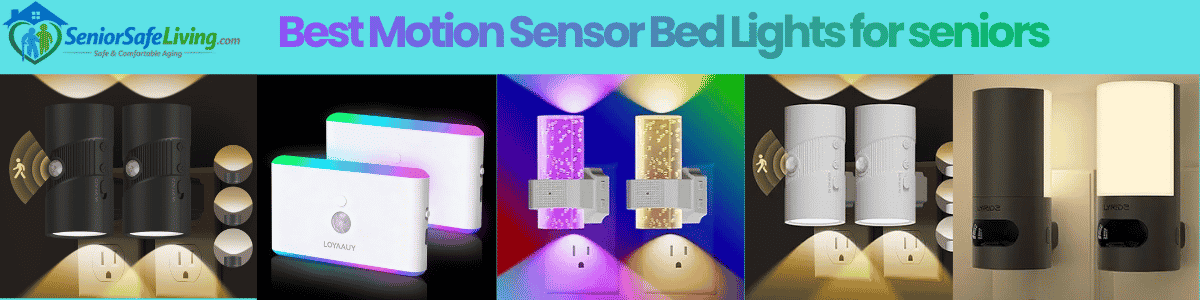
Best Motion Sensor Bed Lights for senior
Best Motion Sensor Bed Lights for Seniors: Safer Nights and Easier Bedside Movement
The Best Motion Sensor Bed Lights for seniors automatically turn on when an older adult gets out of bed, softly lighting the floor and nearby walking path. They help seniors see slippers, rugs, furniture, walkers, and bathroom routes without reaching for switches or walking in darkness.
Nighttime is one of the most vulnerable moments in a senior’s daily routine. A person wakes up, feels half-asleep, swings their legs over the side of the bed, and tries to stand. The room may be dark. Glasses may be on the nightstand. Slippers may be slightly out of place. A rug edge, cord, pet toy, or walker wheel can become hard to see.
That first step matters.
A motion sensor under bed light gives seniors a gentle guide before they fully stand. Instead of turning on a bright ceiling light or fumbling for a lamp, the floor lights up automatically when motion is detected. This small upgrade can make the bedroom feel safer, calmer, and more supportive.
For adult children, caregivers, and spouses, under-bed lighting can also reduce worry. It does not replace careful fall prevention, but it supports safer movement during late-night bathroom trips, early morning wake-ups, and restless nights.
Why the Best Motion Sensor Bed Lights for Seniors Matter
The bedroom may feel familiar, but that does not always make it safe. Many seniors move through their bedroom without fully waking up. They may be groggy, dizzy, stiff, or disoriented. If the room is dark, the risk increases.
The Best Motion Sensor Bed Lights for seniors solve a simple but important problem: they light the floor automatically at the moment the senior needs it most.
Older adults may need extra nighttime lighting because of:
- Low vision or difficulty seeing in dim rooms
- Slower dark adaptation after waking
- Balance changes when standing from bed
- Arthritis stiffness in hips, knees, or feet
- Medication side effects such as dizziness or drowsiness
- Neuropathy that affects foot placement
- Memory changes that make switches harder to find at night
- Frequent bathroom trips during the night
Good under-bed lighting supports visibility without overwhelming the room. A bright overhead light can feel harsh and may make it harder to fall back asleep. A soft motion-activated glow gives just enough light to help the senior orient themselves.
The best setup should make the first steps out of bed feel natural and steady. The senior should not need to think about the light. It should simply turn on when needed and turn off after movement stops.
How Motion Sensor Under Bed Light Systems Work
A motion sensor under bed light usually includes LED light strips or small LED bars installed under the bed frame. A sensor detects motion near the bed and activates the light. After a short period without movement, the light turns off automatically.
Most systems use passive infrared motion detection, often called PIR. This sensor notices changes in body heat and movement. When the senior lowers their legs or steps near the bed, the sensor activates the light.
Some systems also include a daylight sensor. This means the light only turns on when the room is dark. During the day, it stays off even if movement is detected.
Common Parts of an Under Bed Lighting Kit
Most under-bed motion lighting kits include:
- LED light strip or LED light bars
- Motion sensor
- Power adapter, battery pack, or rechargeable battery
- Adhesive backing or mounting clips
- Brightness control on some models
- Timer settings on some models
Senior-friendly models should be simple. Complicated app controls, color-changing party modes, or tiny buttons may not matter. What matters most is reliable, gentle, automatic floor lighting.
Why Automatic Lighting Is Helpful
Automatic lighting reduces the need to reach, twist, or search in darkness. This is especially useful for seniors who have limited mobility, arthritis, tremors, low vision, or memory challenges.
The light should activate before the senior fully stands. That gives them a visual cue: where the floor is, where the slippers are, and whether the path is clear.
Under Bed Lighting Motion Sensor Benefits for Senior Bedrooms
Under bed lighting motion sensor systems do more than make the room look modern. For seniors, they support practical safety and comfort.
They Light the Floor, Not the Eyes
A good under-bed light glows downward and outward across the floor. It should not shine directly into the senior’s face. This matters because older eyes can be sensitive to glare, especially at night.
Floor-level lighting helps show the walking path while keeping the room calm.
They Reduce the Need to Reach for a Switch
Many bedrooms have lamps or switches that are not easy to reach from bed. A senior may need to lean, twist, or stand in darkness just to turn on a light. Motion-activated lighting removes that step.
They Support Nighttime Bathroom Trips
Many seniors wake up at night to use the bathroom. This short walk can become risky when the floor is dark. Under-bed lighting can serve as the first safety cue before hallway night lights or bathroom lights take over.
They Help Caregivers Without Disturbing Sleep
If a caregiver sleeps nearby, a soft under-bed glow is less disruptive than a ceiling light. It provides visibility without waking everyone in the room.
They Can Reduce Fear of Getting Up
Some seniors become afraid of nighttime movement after a near fall. Automatic lighting can restore confidence. The senior does not feel like they are stepping into a black space.
Motion Sensor Light for Under Bed: Key Features to Look For
Choosing the right motion sensor light for under bed use requires more than picking the first product online. Senior safety depends on brightness, sensor reliability, installation, power source, and comfort.
Warm White Lighting
Warm white light is usually more comfortable at night than cool blue-white light. It feels softer and less startling when the senior wakes up.
Look for warm white lighting around 2700K to 3000K if available. Natural white may also work, but avoid harsh lighting that feels too bright in a dark bedroom.
Adjustable Brightness
Adjustable brightness is very useful. Some seniors need more light because of low vision. Others prefer a softer glow because bright light disrupts sleep.
A dimmable system lets the family test different settings and choose the safest comfortable level.
Reliable Motion Detection
The sensor should activate when the senior begins getting out of bed, not after they have already taken several steps.
Look for a sensor with an appropriate detection range and angle. It should face the area where the senior’s feet touch the floor.
Auto-Off Timer
The light should stay on long enough for the senior to stand, find balance, and begin walking. If it turns off too quickly, it can create confusion.
Many lights stay on for 30 seconds to several minutes. Seniors who move slowly may need a longer setting.
Low-Glare Design
The LEDs should be hidden under the bed frame or diffused. Exposed bright dots can create glare or visual discomfort.
Safe Cord Management
If the light plugs into an outlet, cords must stay out of walking paths. A helpful lighting system should never create a new tripping hazard.
Easy Installation
Adhesive-backed strips are common, but the adhesive should hold well. Mounting clips can add security. The system should not fall, dangle, or loosen over time.
Battery, Rechargeable, or Plug-In: Which Is Best for Seniors?
Motion sensor bed lights usually come in three power types: battery-powered, rechargeable, and plug-in. Each has benefits and drawbacks.
Plug-In Motion Sensor Bed Lights
Plug-in lights are often the most reliable for everyday senior use. They stay powered as long as the outlet works. This avoids the problem of dead batteries during the night.
They are best for bedrooms where an outlet is close to the bed and the cord can be secured safely along the wall or under the bed frame.
Benefits include:
- Consistent power
- No battery replacement
- Good for nightly use
- Often brighter and more stable
The main concern is cord safety. Use cord clips or cable channels to keep wires away from the walking path.
Battery-Powered Motion Sensor Lights
Battery-powered lights are flexible and easy to place. They work well where outlets are not available.
However, batteries must be checked and replaced. For seniors living alone, this can become a maintenance problem. A dead light may go unnoticed until the senior needs it.
Rechargeable Under Bed Lights
Rechargeable lights offer a middle ground. They avoid constant battery buying and can be placed without a permanent cord.
The drawback is that someone must remember to recharge them. For caregivers who visit regularly, this can work well. For seniors who may forget, plug-in models may be safer.
Best Places to Install Motion Sensor Bed Lights in a Senior Bedroom
Placement is the difference between helpful lighting and decorative lighting. The goal is to illuminate the exact area where the senior moves.
Under the Bed Frame on the Exit Side
Install the light under the side of the bed where the senior usually gets up. The glow should spread across the floor beside the bed.
If the senior uses both sides of the bed, consider lighting both sides.
Near the Foot Placement Area
The sensor should detect movement when the senior lowers their feet or shifts toward the bed edge. If the sensor points too far away, it may activate late.
Avoid Direct Eye Exposure
Do not place the light where it shines into the senior’s eyes while lying down. The light should be hidden under the frame and aimed at the floor.
Light the Path Toward the Bathroom
Under-bed lighting should connect visually with the next safety point. For example, the bed light activates first, then a hallway night light or bathroom motion light helps guide the rest of the path.
Keep Cords Away From Feet
Never run a cord across the bedroom floor where the senior walks. Secure cords along the bed frame, wall, or baseboard.
Best Motion Sensor Bed Lights for Seniors With Low Vision
Seniors with low vision may need stronger and more evenly spread lighting. A tiny dim light may not be enough to show slippers, rugs, thresholds, or furniture legs.
For low vision, choose under-bed lighting with:
- Adjustable brightness
- Wide light coverage
- Warm or natural white tone
- Reliable early sensor activation
- Low-glare LED diffusion
- Strong contrast with the floor area
Also consider the bedroom floor color. Dark slippers on a dark floor may still be hard to see. Good lighting works best when the walking path is clear and visually simple.
If the senior has severe vision loss, combine under-bed lighting with additional safety measures such as bedside lamps, hallway night lights, high-contrast rugs that are secured properly, and caregiver-approved mobility aids.
Best Motion Sensor Bed Lights for Seniors With Dementia or Memory Changes
Nighttime confusion can happen in seniors with dementia, Alzheimer’s disease, or memory changes. A dark bedroom may feel unfamiliar, even if the person has lived there for years.
Motion sensor bed lights can help by creating a gentle orientation cue. When the senior moves, the floor glows. This can help them understand where the bed ends and where the walking path begins.
Keep the Setup Consistent
Do not move the lights frequently. Consistency helps seniors with memory challenges feel more secure.
Use Gentle Warm Light
Harsh or colorful lights may confuse or startle some seniors. Warm white is usually a better choice.
Avoid Flashing or Color-Changing Modes
Color effects may look interesting, but they are not ideal for senior safety. Use a steady, calm light.
Guide Toward Safe Routes
Use under-bed lighting as the first cue, then add night lights toward the bathroom. The path should feel simple and predictable.
Bedroom Safety Tips to Use With Motion Sensor Under Bed Light Systems
A motion sensor bed light is helpful, but it works best as part of a complete bedroom safety plan.
Keep the Floor Clear
Remove shoes, cords, books, laundry, pet toys, and loose items from the path around the bed. A light can reveal hazards, but the best option is to remove them.
Secure or Remove Loose Rugs
Loose rugs can slide or curl at the edges. If a rug is necessary, use non-slip backing and make sure it lies flat.
Place Slippers in the Same Spot
Slippers should be easy to find and should not become a tripping hazard. Keep them beside the bed in a consistent position.
Use a Stable Nightstand
The nightstand should not wobble. Seniors sometimes grab furniture for balance, even when they should not. Keep essential items within reach.
Add a Lamp Within Reach
A motion sensor bed light helps with floor visibility, but a reachable lamp still matters. The senior should be able to turn on a brighter light when needed.
Light the Route to the Bathroom
Use motion sensor night lights in the hallway and bathroom. Under-bed lighting should be the first step in a connected lighting path.
Common Mistakes to Avoid When Buying Under Bed Lighting Motion Sensor Products
Many families buy under-bed lights because they look helpful, but they miss important senior-safety details. Avoid these mistakes.
Choosing Lights That Are Too Bright
Very bright lights can startle seniors and disrupt sleep. The light should be bright enough to show the floor, not so bright that it feels like a spotlight.
Choosing Lights That Are Too Dim
A decorative glow may not show hazards clearly. Seniors with low vision need practical visibility, not just ambiance.
Ignoring Sensor Placement
If the sensor points the wrong way, the light may turn on too late or not at all. Install it where it detects the senior’s normal movement.
Leaving Cords Loose
Loose cords can create the very hazard the lights are meant to prevent. Secure all wires.
Using Color-Changing Modes
Red, blue, green, or flashing lights may be confusing at night. Use steady warm white light for safety.
Forgetting Battery Maintenance
If the light uses batteries, check them regularly. A dead light can leave the senior unexpectedly in darkness.
How to Test Motion Sensor Light for Under Bed Safety
After installation, do not assume the system works perfectly. Test it in real nighttime conditions.
Test From the Senior’s Position
Have the senior lie in bed, move naturally, and place their feet on the floor. The light should activate before they take a step.
Check Brightness
Ask the senior whether the light feels comfortable. Can they see the floor clearly? Is it too bright? Does it shine into their eyes?
Walk the Bathroom Route
Follow the full path from bed to bathroom. Look for dark gaps. Add hallway or bathroom lights if needed.
Check for Shadows
Furniture legs, bed skirts, or storage boxes under the bed can block light. Adjust placement so the floor is visible.
Review After a Few Nights
The first setup may not be perfect. Ask the senior how it feels after real use. Small adjustments can make the system much safer.
Buying Checklist for the Best Motion Sensor Bed Lights for Seniors
Use this checklist before buying:
- Does the light turn on automatically with motion?
- Does it activate before the senior takes a step?
- Is the brightness adjustable?
- Is the color warm and gentle?
- Does it shine on the floor instead of the eyes?
- Is the sensor reliable and easy to position?
- Does the light stay on long enough?
- Can cords be secured safely?
- Is the system easy to install?
- Will it work with the bed frame?
- Is battery maintenance manageable?
- Does it support the senior’s actual nighttime routine?
The best choice is the one that helps the senior move safely without adding confusion or maintenance problems.
Internal Link Suggestions
To improve SEO and keep readers engaged, add internal links to related senior safety content:
- Motion Sensor Night Lights for Seniors
- Best Bed Step Stools with Handle for Senior
- Remote Control Floor Lamps for Seniors
- Anti-Glare Reading Lamps for Seniors
- Bedroom Safety for Seniors
- Fall Prevention Products for Seniors
- Aging in Place Home Safety Checklist
External Authority References
For stronger trust and E-E-A-T signals, you can reference official senior fall-prevention and home-safety resources:
- CDC STEADI Patient and Caregiver Resources
- CDC STEADI Check for Safety: Home Fall Prevention Checklist PDF
- National Institute on Aging: Preventing Falls at Home Room by Room
- MedlinePlus: Preventing Falls
FAQ About Motion Sensor Bed Lights for Seniors
Are motion sensor bed lights good for seniors?
Yes. Motion sensor bed lights are helpful for seniors because they automatically light the floor when movement is detected. This can make it easier to see slippers, rugs, furniture, walkers, and the path to the bathroom during the night.
What is the best motion sensor under bed light for elderly people?
The best motion sensor under bed light for elderly people has warm low-glare lighting, reliable motion detection, adjustable brightness, safe cord management, and enough floor coverage beside the bed. It should activate before the senior takes the first step.
Where should under bed lighting motion sensor strips be installed?
Under bed lighting motion sensor strips should be installed under the bed frame or along the lower bed rail. The light should shine toward the floor, while the sensor should face the area where the senior’s feet touch down.
Are battery or plug-in motion sensor bed lights better for seniors?
Plug-in lights are often better for regular nightly use because they do not need battery replacement. Battery-powered or rechargeable lights are useful when outlets are unavailable, but they require regular charging or battery checks.
Can motion sensor bed lights prevent falls?
Motion sensor bed lights may help reduce fall risk by improving visibility when seniors get out of bed. They cannot prevent every fall and should be combined with clear walkways, non-slip rugs, reachable lamps, and bathroom night lights.
What color light is best for senior under bed lighting?
Warm white light is often best because it feels softer at night and is less likely to disturb sleep. The light should be bright enough to show the floor but not harsh or glaring.
Do motion sensor bed lights work with adjustable beds?
Many motion sensor bed lights can work with adjustable beds, but installation depends on the bed frame design. Make sure the light strip or sensor will not be pinched, stretched, or blocked when the bed moves.
Should seniors use under-bed lights with hallway night lights?
Yes. Under-bed lights are most helpful when they connect to a safe nighttime route. Use hallway and bathroom night lights so the senior has visibility beyond the bedroom.
Conclusion
The Best Motion Sensor Bed Lights for seniors make nighttime movement easier by lighting the floor automatically when an older adult gets out of bed. They help reduce darkness around the first step, show nearby hazards, and support safer trips to the bathroom.
Choose a system with warm white light, adjustable brightness, reliable motion detection, low-glare placement, safe cord management, and an auto-off timer that gives the senior enough time to move calmly. Install the light under the side of the bed where the senior normally exits, and test it in real nighttime conditions.
Remember, under-bed lighting is only one part of bedroom safety. Keep walkways clear, remove loose rugs, place slippers consistently, secure cords, keep a lamp within reach, and add night lights along the bathroom route.
Final tip: The best motion sensor bed light is not the brightest or fanciest one. It is the one that turns on at the right moment, lights the floor clearly, feels gentle at night, and helps the senior take that first step with confidence.