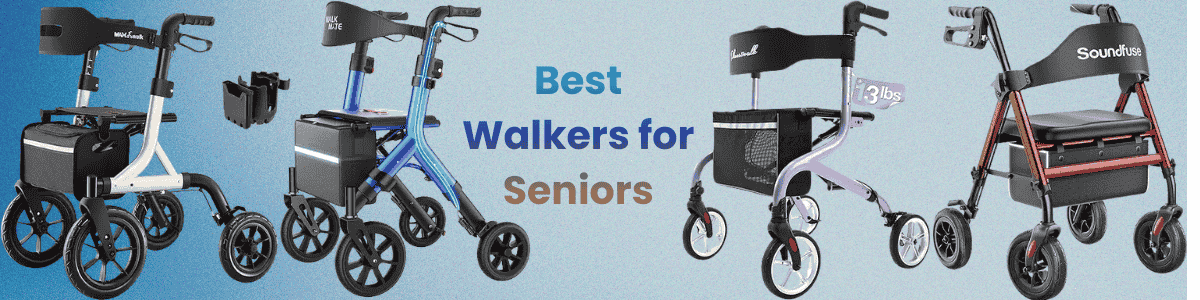
Best Walkers for Seniors
Best Walkers for Seniors – Disabled, and Handicap Mobility Support
As people age, staying mobile and independent becomes a top priority. Walking can get harder due to balance issues, joint pain, or recovery from surgery. That’s where walkers step in—they offer support, safety, and confidence for seniors who want to keep moving.
But picking the best walker isn’t always simple. There are many models, each with different features, sizes, and price tags. Knowing what to look for, and which walkers really make life easier, is essential.
This guide breaks down the best walkers for seniors. Whether you’re buying for yourself or a loved one, you’ll find honest advice, practical tips, and detailed comparisons. We’ll cover the types of walkers, what makes a great walker, and give you a closer look at the top options available today. You’ll also learn how to avoid common mistakes and get answers to the most-asked questions.
Why Walkers Matter For Seniors
Walking is more than just exercise—it’s about living life on your own terms. As we age, health changes can make walking risky. Falls are a major concern: according to the CDC, about one in four older adults falls each year in the United States. A good walker can help reduce this risk by offering stability and balance.
Walkers do more than prevent falls. They support active lifestyles, help with rehabilitation after surgery or injury, and make everyday tasks—like shopping or visiting friends—possible. For many seniors, a walker is the key to independence.
How to Adjust Brakes on a Walker
Adjusting walker brakes is important for safety and control. Most rollator walkers use hand brakes like a bicycle. To adjust them, find the knob or screw near the handle or cable. Turn it until the brakes grip the wheels firmly when squeezed. If your walker has locking brakes, make sure they fully stop the wheels. Always test on a flat surface before use.
Check the brakes regularly to keep them working well. Make sure both sides are even, so the walker does not pull to one side. Look for loose cables or worn parts. Fix any issues quickly to avoid accidents. If needed, ask a caregiver or technician for help. Proper brake adjustment improves safety and confidence.
How High Should a Walker Sit
The correct walker height helps with balance and comfort. When standing straight, the handles should match the crease of your wrist. When you hold the handles, your elbows should bend slightly. This position supports good posture and reduces strain.
If the walker is too low, you may lean forward and lose balance. If it is too high, it can feel unstable. Most walkers have adjustable height settings. Take time to set it properly for your body. You can also ask a professional for help. The right height makes walking safer and easier.
Types Of Walkers: Which Is Right For You?
Not all walkers are the same. Choosing the right type is the first step. Here’s a breakdown of the main types and who they suit best.
Standard Walkers
These are the most basic walkers. They have four sturdy legs and no wheels. You pick them up and move them forward as you walk. Standard walkers give the most stability but require more effort.
Best for: People who need maximum support, especially indoors or on flat surfaces.
Two-wheeled Walkers
These walkers have two wheels in front and two regular legs in back. The wheels make it easier to push, while the back legs offer stability.
Best for: Seniors who need some support but want less lifting.
Rollators (three Or Four Wheels)
Rollators are popular for good reason. They have three or four wheels, brakes, and usually a seat. They’re easy to push and work well both indoors and outdoors.
Best for: Active seniors who can walk but need help with balance or fatigue.
Knee Walkers
Also called knee scooters, these let you rest one knee and push with the other leg. They’re not for everyone but are great for certain injuries.
Best for: People recovering from foot or ankle surgery who can’t put weight on one foot.
Specialty Walkers
Some walkers are made for heavy-duty use (bariatric walkers), for narrow spaces, or for travel. These meet special needs but work like regular walkers.
What Makes A Walker Great?
Before you see the top models, it’s smart to know what really matters. Here are the key factors to consider:
- Stability and Support: The main job of a walker is to keep you upright and safe. Look for a wide base and sturdy frame.
- Weight: Lightweight walkers are easier to lift and transport, but must still feel solid.
- Adjustability: The handles should adjust to your height for comfort and good posture.
- Ease of Use: Folding mechanisms, simple brakes, and easy assembly make life easier.
- Portability: If you travel or visit friends, a walker that folds small is a plus.
- Comfort Features: Padding on grips, built-in seats, and baskets for carrying items can make a big difference.
- Wheel Size: Larger wheels (usually 8 inches or more) handle outdoor surfaces better.
- Weight Capacity: Check the maximum weight the walker can safely hold.
- Price and Value: More expensive doesn’t always mean better. Choose what fits your needs and budget.
Non-obvious insight: Many first-time buyers forget to measure doorways at home—some walkers are too wide to fit through older or narrow doors. Always check dimensions before buying.
12 Best Walkers For Seniors
Here’s a closer look at the top-rated walkers, chosen for their safety, comfort, and reliability. Each walker suits different needs, so you can find your perfect match.
1) 3 Wheel Height Adjustable Walkers for Seniors Lightweight, Foldable, with Cane and Cup Hold
2) Heavy Weight Capacity Rollator Walker for Seniors(Foldable & Lightweight)
3) Rollator Walker Combo (Transport-Wheelchair-Lightweight-Foldable- Brakes & Pouch)
4) HolyHeal Rollator Walker with Seat & Backrest – Lightweight Adjustable Mobility Walker
5) Lightweight Aluminum Frame Rollator Walkers for Seniors with Seat, 350 lb Weight Capacity, 18
6) Medical Walker with Seat – Reliable Support for Daily Mobility
7) Folding Walker for Seniors – Compact, Lightweight & Easy Folding Mobility Support
8) Folding Walker with Wheels – Smooth Movement & Strong Frame
9) Adjustable Foldable Walker – Perfect Fit for Daily Walking Support
10) Advanced Rollator Walker – Smooth Wheels & Comfortable Seating Support
11) Portable Rollator Walker – Easy Folding & Daily Use Comfort
12) Premium Rollator Walker with Seat – Safe, Stable & Easy to Use
Standout feature: The Nitro’s cross-brace design makes it extra stable and easy to fold sideways, fitting in most car trunks.
2. Medline Heavy Duty Bariatric Folding Walker
For those needing extra support, the Medline Heavy Duty Bariatric Walker is built tough. It’s wider and stronger than standard walkers, supporting up to 500 pounds. It comes with or without wheels and folds flat for storage. The grips are soft and comfortable for long use.
Best for: Larger users who want peace of mind and reliability.
3. Hugo Elite Rollator Walker
The Hugo Elite Rollator is a four-wheel walker with a padded seat and a storage bag. Its wheels are 8 inches—large enough for outdoor use but still easy to turn indoors. The seat is a bit higher than average, which helps seniors who have trouble standing up from low chairs. The built-in backrest adds comfort, and the handles are easy to adjust.
Non-obvious benefit: The Hugo Elite has a unique handgrip shape that helps reduce wrist pain, which is common in arthritis sufferers.
4. Vive Folding Walker
The Vive Folding Walker is a simple, no-frills standard walker. It’s lightweight (just 6 pounds), folds easily, and fits well in small spaces. The height is adjustable, and it comes with two wheels that can be added or removed. The price is usually lower than most rollators, making it an affordable choice.
Best for: Seniors who need basic support indoors or during recovery.
5. Nova Traveler 3 Wheel Rollator
If you need something nimble, the NOVA Traveler is worth a look. With three wheels, it’s lighter and turns more easily than four-wheel models. It comes with a pouch for carrying things and hand brakes for safety. The wheels are big enough for sidewalks but slim enough for tight spaces.
Caution: Three-wheel rollators aren’t as stable as four-wheel models—best for seniors with good balance.
6. Probasics Two-button Folding Walker
This walker is simple but strong. The ProBasics Two-Button Walker uses a push-button folding system, so you can close it with one hand. It’s light, fits through most doors, and the grips are comfortable for daily use. The price is budget-friendly, and it holds up well over time.
Best for: Seniors who want a basic walker that’s easy to store or take in the car.
7. Helavo All Terrain Rollator
Outdoor lovers will appreciate the Helavo All Terrain Rollator. Its large, shock-absorbing wheels handle grass, gravel, or uneven sidewalks with ease. The frame is both lightweight and strong, and it comes with a roomy seat and a bag for shopping. Height adjustments suit users from 5’2” to 6’5”.
Unique advantage: This rollator’s wheels have a tread pattern for better grip, which most walkers lack.
8. Oasisspace Compact Folding Walker
The OasisSpace Compact Walker is designed for tight homes and travel. Its narrow frame fits through small doorways, and it folds up with a simple press. It includes two detachable skis that help the walker glide over carpets without snagging.
Good to know: It meets FDA approval for safety and quality.
9. Lumex Walkabout Lite Rollator
Lumex Walkabout Lite stands out for being ultra-light at under 15 pounds. It’s easy to push, even for those with weak arms. The seat and backrest are padded, and it comes with a zippered pouch for valuables. The brakes are smooth and reliable.
Best for: Seniors who want a walker that won’t tire them out.
10. Stander Ez Fold-n-go Walker
For frequent travelers, the Stander EZ Fold-N-Go is a winner. It folds down to a quarter of its size, fitting in most suitcases or car seats. Despite being small, it’s sturdy and supports up to 400 pounds. The handles adjust quickly, and the included pouch is handy for shopping or errands.
Non-obvious insight: This walker is one of the few that can be used in airplanes, thanks to its super-compact fold.
How To Choose The Best Walker For Your Needs
Picking a walker is about more than just price. Here are steps and tips to make the right choice.
1. Talk To Your Doctor Or Therapist
A healthcare professional can suggest the best type of walker for your health and home. They might recommend a standard walker for maximum support, or a rollator if you’re active.
2. Test For Height And Fit
The right height matters for comfort and safety. When standing with hands at your sides, the walker’s handles should reach your wrist. Elbows should bend slightly (about 15 degrees) when holding the walker.
3. Consider Home And Lifestyle
- Measure your doorways and hallways. Some walkers are too wide for older homes.
- Think about storage—do you need one that folds flat?
- Will you use it mainly indoors, or outdoors too? Larger wheels help on uneven surfaces.
4. Check The Weight And Portability
If you travel often, look for a light walker that folds small. If you stay home, a heavier model may feel more stable.
5. Look For Useful Extras
Features like built-in seats, baskets, or trays can make daily life easier. Don’t pay for features you won’t use.
Practical tip: Always try the brakes before buying a rollator. Some are too stiff or loose for weak hands.
6. Read Real Reviews
Check trusted sources and read what other users say. Look for comments about durability, comfort, and customer service.
7. Set A Realistic Budget
Walkers range from $50 to $300+. More expensive models may have better materials or features, but the cheapest walker that fits your needs can still be safe and effective.
Common mistake: Many people buy the fanciest walker, only to find it too heavy or big for their home.
Maintenance And Safety Tips
Your walker is an investment in your health. Keep it in top shape with these tips:
- Clean regularly: Wipe the frame, grips, and wheels to remove dirt and germs.
- Check brakes: Make sure rollator brakes work smoothly and don’t slip.
- Inspect for wear: Look for cracks, loose screws, or worn wheels every month.
- Replace tips or wheels: Rubber tips and wheels wear out over time. Replace them if they look smooth or cracked.
- Store safely: Keep your walker inside, away from rain or extreme heat.
Non-obvious insight: Add bright tape or stickers to your walker for better visibility in crowded places. This prevents others from tripping over it.
Common Mistakes When Buying A Walker
Even smart buyers can make simple errors. Here are the most common, and how to avoid them:
- Ignoring weight limits: Always check the walker’s capacity to avoid breakage.
- Skipping a test drive: Try before you buy. Even a high-rated walker might not feel right for you.
- Choosing style over comfort: Looks matter, but comfort and safety come first.
- Forgetting about home size: If your home has narrow doors or stairs, measure carefully.
- Not adjusting the height: Many people use walkers that are too low or high, leading to back pain or poor posture.
Where To Buy The Best Walkers
Walkers are sold at medical supply stores, pharmacies, big box retailers, and online. In-person shopping lets you test the walker, but online shops often offer better prices and more models. Some insurance plans or Medicare may cover part of the cost if prescribed by a doctor.
Frequently Asked Questions
How Do I Know If I Need A Walker Or A Rollator?
A walker is best if you need maximum support and stability, especially after surgery or if you have serious balance problems. A rollator is better if you can walk but need help with fatigue or balance, and want a seat to rest.
Can I Use A Walker On Stairs?
No, standard walkers and rollators are not safe on stairs. You should use handrails or a stair lift instead. Some physical therapists can teach safe stair techniques with a cane, but not with a walker.
How Do I Adjust My Walker To The Right Height?
Stand up straight, let your arms hang at your sides. The walker’s handles should be at the crease of your wrist. When you hold the handles, your elbows should bend slightly (15–20 degrees).
What’s The Difference Between A Walker And A Rollator?
A walker usually has four legs and no wheels, or two wheels in front. A rollator has three or four wheels, hand brakes, and often a seat. Rollators are easier to push and turn, but require more balance.
Will Medicare Or Insurance Pay For A Walker?
Many insurance plans, including Medicare Part B in the U. S. , cover walkers if your doctor says it’s medically necessary. Check with your insurance provider about coverage, paperwork, and what models they’ll pay for.
Find Your Perfect Walker
Choosing the best walker for seniors is about matching the right features to your lifestyle, health, and home. It’s not just a tool—it’s a way to stay active, safe, and independent. Take time to measure your space, test different models, and ask for advice from healthcare professionals.
With the right walker, every step can be more confident.
Remember, the best walker is the one that fits you—not just your budget or the latest trend. Stay safe, keep moving, and enjoy your independence!