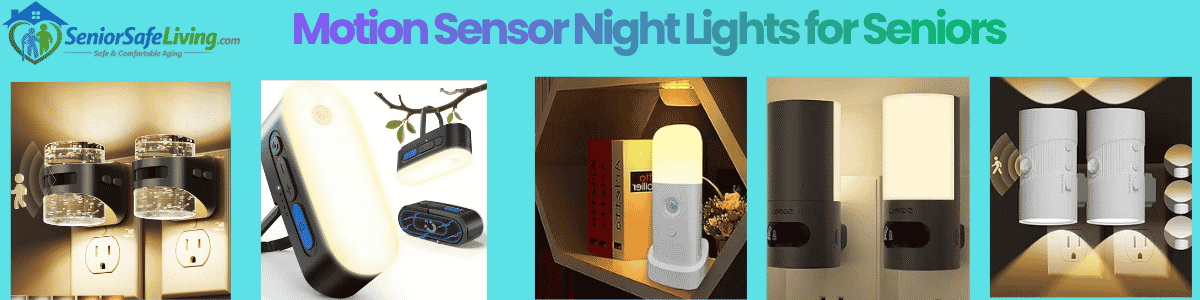
Motion Sensor Night Lights for Seniors
Motion Sensor Night Lights for Seniors: Safer Nights, Fewer Trips, Better Independence
Motion Sensor Night Lights for seniors automatically brighten dark paths when movement is detected, helping older adults walk more safely at night. They are especially useful in bedrooms, bathrooms, hallways, stairways, and kitchens where poor lighting can increase the chance of trips, slips, and falls.
For many seniors, nighttime is when the home becomes harder to navigate. The same hallway that feels familiar during the day may become confusing at 2 a.m. A bathroom trip can turn risky when the room is dark, the floor is cold, and the light switch is just out of reach. That is where a simple motion sensor night light can make a meaningful difference.
Falls are a serious safety concern for older adults. The CDC reports that falls are the leading cause of injury among adults ages 65 and older, and millions of older adults visit emergency departments each year because of falls. CDC older adult fall data supports the importance of improving home safety and visibility. The National Institute on Aging also recommends practical home changes to help reduce tripping and slipping hazards. NIA fall prevention guidance highlights the role of safer home environments.
A motion sensor night light is not a medical device, and it cannot prevent every accident. But when used correctly, it can support safer movement, reduce nighttime confusion, and give seniors more confidence moving around their home after dark.
Why Motion Sensor Night Lights for Seniors Matter
Nighttime mobility is different for seniors. Aging can affect vision, balance, reaction time, muscle strength, and depth perception. A younger person may wake up, walk across a dark room, and quickly find a switch. An older adult may need more time to adjust to darkness, more support while walking, and clearer visual cues to avoid obstacles.
This is why motion sensor night lights for seniors are more than small convenience gadgets. They solve a real problem: the dangerous gap between waking up and reaching a light switch.
Think about a senior who wakes up suddenly to use the bathroom. They may feel slightly dizzy, sleepy, or disoriented. If the room is dark, they may not see slippers, a rug edge, a walker, a pet, or the corner of a bed frame. A motion sensor night light turns on automatically, helping the person see the path before taking several steps.
That automatic function matters because many seniors do not want to turn on a bright overhead light. A ceiling light can feel harsh, disturb sleep, or wake a spouse. A soft motion-activated light creates a safer middle ground. It provides enough visibility without flooding the room with brightness.
The biggest benefits include:
- Hands-free lighting when seniors wake up at night
- Better visibility in hallways, bathrooms, and bedrooms
- Less need to search for switches in the dark
- Support for aging in place and independent living
- More peace of mind for family members and caregivers
A good night light does not need to be complicated. In fact, the best senior-friendly models are usually simple, automatic, soft, and reliable.
How a Motion Sensor Night Light for Seniors Works
A motion sensor night light for seniors uses a built-in sensor to detect movement. When someone walks nearby, the light turns on automatically. After a short period with no movement, it turns off by itself.
Most indoor motion sensor night lights use passive infrared technology, often called PIR. This type of sensor detects changes in heat and movement. When a person enters the detection zone, the sensor recognizes motion and activates the light.
Many modern models also include a dusk-to-dawn sensor. This means the light only activates when the room is dark enough. During daytime or in a well-lit room, it stays off. That saves energy and prevents unnecessary lighting.
For seniors, this combination is useful because it removes two common problems:
- They do not need to remember to turn the light on.
- They do not need to remember to turn the light off.
This is especially helpful for older adults with arthritis, limited mobility, poor grip strength, memory changes, or low vision. Instead of fumbling for a switch, the light responds naturally to movement.
Common Sensor Features to Look For
Not all motion sensor night lights perform the same way. Some are sensitive from several feet away, while others only activate when someone is very close. Some stay on for 20 seconds, while others stay on for 60 seconds or longer.
For senior use, look for these features:
- Wide detection angle so the light turns on before the person reaches it
- Enough detection distance for hallways and bedrooms
- Auto shut-off to save energy
- Dusk-to-dawn sensing so it only works in darkness
- Soft LED lighting to reduce glare
- Simple setup with no confusing controls
The best choice is one that feels invisible in daily life. It should quietly do its job without requiring constant attention.
Plug In Motion Sensor Night Light vs Battery-Powered Night Light
One of the most common buying questions is whether to choose a plug in motion sensor night light or a battery-powered model. Both can work well, but each is better for different areas of the home.
Why Plug In Motion Sensor Night Lights Are Popular
A plug-in model connects directly to a wall outlet. It is ideal for bedrooms, bathrooms, hallways, kitchens, and entryways where outlets are available.
The biggest advantage is reliability. Once plugged in, the light is always ready. There are no batteries to replace, no charging schedule, and no risk of the light dying at the wrong time.
For seniors who live alone, this can be especially important. A family member may not always be present to check battery levels. A plug-in light keeps things simple.
Benefits of plug-in models include:
- No battery replacement
- Consistent power
- Easy installation
- Good for daily nighttime walking paths
- Often compact and affordable
However, plug-in lights depend on outlet placement. If the outlet is behind furniture, too low, too high, or far from the walking path, the light may not provide enough coverage.
When Battery-Powered Motion Sensor Lights Make Sense
Battery-powered lights are more flexible. You can place them almost anywhere, including closets, cabinets, stair corners, under beds, near walkers, or inside bathrooms without convenient outlets.
They are useful for areas where wiring or outlet access is limited. Some models attach with adhesive strips, screws, or magnets.
Battery-powered lights are best for:
- Closets
- Stair landings
- Under-bed lighting
- Cabinets
- Basement paths
- Temporary safety setups
The downside is maintenance. Batteries must be checked and replaced. For seniors with memory challenges, weak hands, or limited dexterity, battery changes can become frustrating.
Which One Is Better for Seniors?
For most homes, the best answer is a combination. Use plug-in lights for main walking routes and battery-powered lights for spots where outlets are not available.
For example, a senior may use plug-in lights in the bedroom, hallway, and bathroom. Then they may use battery-powered lights under the bed, inside a closet, or near basement stairs.
This creates a layered lighting system. Instead of depending on one light, the home has multiple soft guide points that activate when needed.
Best Places to Install Motion Sensor Night Lights Indoor
Choosing the right product is only half the job. Placement is what turns a light into a safety tool. A motion sensor night light indoor setup should focus on the exact path a senior uses most often at night.
Do not place lights randomly. Walk through the home at night and ask: “Where does the person actually walk?” Then place lights where darkness, corners, steps, or obstacles may create risk.
Bedroom
The bedroom is the first priority. Many nighttime falls happen shortly after getting out of bed, when a person is still sleepy and unsteady.
Place one motion sensor night light near the bed, ideally low enough to illuminate the floor. The goal is not to light the entire room. The goal is to show the floor, slippers, cane, walker, and path to the door.
If the senior shares a room, choose a warm, low-glare light that will not disturb the other person.
Hallway
Hallways can be dangerous because they often have shadows, narrow walking space, furniture edges, and rugs. A motion sensor light at each end of a hallway can create a gentle guiding path.
If the hallway is long, use more than one light. A single weak light may create bright and dark zones, which can confuse depth perception.
Bathroom
The bathroom is one of the most important areas for senior safety. Wet floors, tile surfaces, bath mats, and low toilet seats can all increase risk.
Install a motion sensor night light near the bathroom entrance or inside the bathroom, depending on outlet location. Make sure it does not shine directly into the eyes. It should light the floor and key fixtures.
For extra safety, combine lighting with grab bars, non-slip mats, and clear floor space.
Stairways
Stairs need careful lighting. A senior should be able to see each step edge clearly. Poor stair lighting can make it difficult to judge height and distance.
Use motion sensor lights near the top and bottom of the stairs. For longer stairways, consider step lights or wall-mounted battery-powered lights along the route.
Avoid placing lights where they cast strong shadows across the steps. Shadows can make stairs look uneven.
Kitchen Path
Some seniors wake up at night to drink water, take medication, or check something in the kitchen. A dark kitchen can include many obstacles: chair legs, cabinet corners, floor mats, and pet bowls.
Place lights along the bedroom-to-kitchen route. If medication is stored in the kitchen, clear lighting becomes even more important.
Entryway and Living Room
Entryways and living rooms may not seem like nighttime danger zones, but they often contain shoes, bags, cords, rugs, and furniture. Motion sensor lights can help seniors who come home after dark or move through the home before sunrise.
A light near the front door can also help visitors, caregivers, or family members enter safely without turning on harsh overhead lights.
Important Features to Look for Before Buying
The best motion sensor night lights for seniors are not always the brightest or most expensive. Senior-friendly design is about comfort, visibility, simplicity, and reliability.
Soft Brightness Instead of Harsh Light
Brightness matters, but more brightness is not always better. A light that is too bright can cause glare, especially for seniors with cataracts, glaucoma, dry eyes, or light sensitivity.
Look for a night light that gives enough illumination to see the floor clearly. Warm white or soft white is often more comfortable than harsh blue-white lighting.
A good rule is simple: the senior should be able to see the walking path without squinting.
Warm Color Temperature
Color temperature affects comfort. Cool white lights can feel sharp at night. Warm lights feel softer and are less likely to disturb sleep.
For most senior bedrooms and hallways, warm white lighting around 2700K to 3000K is a comfortable range. Bathrooms and stairways may benefit from slightly brighter neutral light, as long as it does not glare.
Adjustable Brightness
Some motion sensor lights include brightness settings. This is useful because every home is different. A small bathroom may only need low brightness, while a long hallway may need a stronger setting.
Adjustability also helps if the senior has specific vision needs. Someone with low vision may need more light than someone with normal age-related vision changes.
Reliable Motion Detection
A night light should activate before the senior reaches the dark area. If it turns on too late, it does not solve the problem.
Look for a model with a reasonable detection range and angle. For hallways, wider detection is helpful. For bathrooms, a shorter detection range may be enough.
Auto-Off Timing
The light should stay on long enough for the person to pass safely. If it turns off too quickly, the senior may suddenly be left in darkness.
Many lights stay on for 20 to 60 seconds after motion stops. For seniors who move slowly, a longer auto-off time may be better.
Simple Design
A senior-friendly night light should not require an app, remote, Wi-Fi setup, or complicated buttons. Simple is safer.
Choose a design that family members can install quickly and the senior can use without learning anything new.
Low Heat LED Bulbs
LED lights are a smart choice because they use little energy, last a long time, and remain cooler than older bulb types. This makes them practical for overnight use.
Compact Shape
A plug-in night light should not block both outlets unless necessary. Compact models are better for bathrooms and hallways where outlet space may be limited.
How Motion Sensor Night Lights Support Fall Prevention
Falls can happen for many reasons: poor balance, medication side effects, loose rugs, wet floors, weak muscles, poor footwear, and clutter. Lighting is only one part of the bigger fall-prevention picture. But it is a part that many families can improve quickly.
The CDC emphasizes that older adult falls are common and preventable, while the National Institute on Aging recommends making the home safer by reducing hazards that can cause trips and slips. Better lighting supports that goal by helping seniors identify obstacles before they step.
A motion sensor night light helps in three practical ways.
It Reduces the “First Few Steps” Risk
The first few steps after waking can be the most unstable. A senior may feel groggy, stiff, or slightly off balance. If the room is dark, they may step in the wrong direction or miss an object on the floor.
Automatic lighting gives immediate visual guidance. The person does not have to cross the room in darkness just to reach a switch.
It Helps Seniors See Floor-Level Hazards
Most fall hazards are low: rug corners, shoes, cords, pet toys, slippers, thresholds, and uneven flooring. Ceiling lights are helpful, but they may not always highlight the floor path clearly at night.
A low-positioned night light can make these hazards easier to notice.
It Protects Independence
Many seniors do not want to ask for help every time they get up. They want privacy, dignity, and control. Good lighting supports independence by making routine movement easier and safer.
For caregivers, this can reduce worry. For seniors, it can reduce fear.
Choosing a Motion Sensor Night Light for Seniors With Low Vision
Seniors with low vision need special attention. A standard night light may not be enough if the person has macular degeneration, cataracts, glaucoma, diabetic eye disease, or severe contrast sensitivity.
For low vision, the goal is not just brightness. It is clarity.
Use More Than One Light
One small light may leave shadows. Shadows can confuse depth perception and make objects harder to identify. Multiple soft lights can create a more even path.
Avoid Direct Glare
Glare can be uncomfortable and even disorienting. Place lights so they shine toward the floor or wall, not directly into the eyes.
Improve Contrast
Lighting works better when the home also has contrast. For example, a dark rug on a dark floor can still be hard to see. A light-colored path, contrasting tape on stair edges, or visible bathroom mats can help.
Test at Real Nighttime Conditions
Do not test the light only during the day. Install it, turn off the lights at night, and watch how it performs. Does it activate early enough? Does it create shadows? Does it show the floor clearly?
Ask the senior directly. Their comfort matters more than the product description.
Motion Sensor Night Lights for Seniors With Dementia or Memory Challenges
For seniors living with dementia, Alzheimer’s disease, or memory changes, nighttime can be confusing. A dark room may increase disorientation. A bright overhead light may cause agitation or make it harder to return to sleep.
Motion sensor lighting can help create a calm, automatic cue. When the senior moves, the path becomes visible. They do not need to remember where the switch is.
However, placement should be thoughtful.
Keep Lighting Consistent
Sudden changes in the home can confuse someone with dementia. Place lights in consistent locations and avoid moving them frequently.
Use Warm, Gentle Light
Harsh lighting may feel startling. A warm, soft glow is usually better for nighttime orientation.
Guide Toward Safe Areas
Lights can subtly guide movement. For example, a light between the bed and bathroom can help the person follow the correct route.
Avoid Creating Confusing Reflections
Shiny floors, mirrors, and glass surfaces can reflect lights in ways that may confuse some seniors. Test the setup at night and adjust if needed.
Motion sensor night lights are not a complete dementia safety solution, but they can be part of a supportive environment that reduces stress and improves orientation.
Room-by-Room Setup Plan for Safer Nighttime Walking
A smart lighting plan follows the senior’s actual routine. Instead of asking, “How many lights should I buy?” ask, “Where does my parent, spouse, or loved one walk after dark?”
Bedroom to Bathroom Path
This is the most important route in many homes. Place one light near the bed, one in the hallway, and one near or inside the bathroom.
The path should feel continuous. When one light turns off, another should already be available nearby.
Bedroom to Kitchen Path
If the senior drinks water, eats a snack, or takes medication at night, light the route to the kitchen. Pay attention to corners, rugs, and furniture.
Stair Route
Stairs require more lighting than flat hallways. Make sure the top step and bottom step are clearly visible. If possible, add lights along the staircase wall.
Closet and Dressing Area
Some seniors get dressed early in the morning before natural light enters the room. A motion light inside or near the closet can prevent bending, reaching, and searching in darkness.
Garage or Laundry Area
If the senior visits the garage, laundry room, or utility space, consider additional lighting. These areas often have uneven floors, steps, boxes, or cords.
Common Mistakes to Avoid
Buying a night light is easy. Setting it up safely takes a little more thought. Avoid these common mistakes.
Choosing a Light That Is Too Dim
A decorative glow may look nice, but it may not show the walking path. The light should be functional first.
Choosing a Light That Is Too Bright
A harsh light can cause glare and disturb sleep. Seniors may avoid using it if it feels uncomfortable.
Installing Only One Light
One light rarely covers a full route. A safer setup usually uses multiple lights in connected areas.
Ignoring Shadows
Bad placement can create shadows that make the floor harder to read. Test lights after dark and adjust the angle if needed.
Blocking the Sensor
Furniture, curtains, doors, and walkers can block motion detection. Make sure the sensor has a clear view of movement.
Forgetting Battery Maintenance
If using battery-powered models, create a simple replacement schedule. A dead night light is worse than no plan because the senior may expect it to turn on.
Best Types of Motion Sensor Night Lights for Seniors
There are several types of motion sensor lights. The right choice depends on the home layout and the senior’s needs.
Plug-In LED Motion Sensor Night Lights
These are best for everyday indoor use. They are simple, reliable, and low maintenance. They work well in bedrooms, hallways, bathrooms, and kitchens.
Choose this type if you want a practical, set-it-and-forget-it solution.
Rechargeable Motion Sensor Night Lights
Rechargeable models are useful when you want flexibility without constantly buying batteries. They usually attach with magnets or adhesive strips.
They are good for closets, under cabinets, stairways, and temporary placement.
Battery-Powered Stick-On Lights
These are affordable and easy to install. They work well in places without outlets. However, they need battery checks.
Under-Bed Motion Sensor Lights
These lights activate when the senior gets out of bed. They create a soft glow near the floor, which can be useful for nighttime bathroom trips.
Motion Sensor Toilet Night Lights
These attach to the toilet and illuminate the bowl area. They can be helpful, but they should not replace proper bathroom floor lighting. Seniors need to see the entire bathroom path, not just the toilet.
Stair Motion Sensor Lights
These are designed to show step edges and stair paths. They are especially useful in homes where seniors use stairs daily.
Buying Checklist for Senior-Friendly Night Lights
Before buying, use this checklist to avoid wasting money on the wrong product.
- Does it turn on automatically when motion is detected?
- Does it have dusk-to-dawn sensing?
- Is the brightness soft but clear?
- Is the color warm and comfortable?
- Will it activate before the senior reaches the dark area?
- Is it easy to install?
- Does it require batteries or plug directly into the wall?
- Will it block another outlet?
- Can the senior tolerate the brightness at night?
- Does it fit the room where it will be used?
For most families, the best starting point is to buy a small pack of plug-in LED motion sensor night lights and place them along the bedroom-to-bathroom route. After testing that setup, add more lights where needed.
How Many Motion Sensor Night Lights Does a Senior Need?
There is no one-size-fits-all number. A small apartment may only need three or four lights. A larger home may need eight or more.
Start with the most important nighttime routes:
- One near the bed
- One in the hallway
- One near the bathroom
- One inside the bathroom
- One near stairs if applicable
- One near the kitchen path if needed
After installation, observe how the senior moves at night or early morning. You may discover a shadowed corner, a dark doorway, or a step that needs extra lighting.
The goal is not to make the home bright everywhere. The goal is to create safe visual guidance where movement happens.
Practical Safety Tips Beyond Night Lights
Motion sensor night lights work best when combined with other home safety improvements. Lighting helps seniors see hazards, but the hazards should also be reduced.
Consider these practical steps:
- Remove loose rugs or secure them with non-slip backing.
- Keep walking paths free from shoes, cords, bags, and pet toys.
- Install grab bars near the toilet and shower.
- Use non-slip mats in bathrooms.
- Make sure slippers and shoes have good grip.
- Keep frequently used items within easy reach.
- Use contrasting colors on stair edges if visibility is poor.
- Encourage regular vision checks.
- Review medications with a healthcare provider if dizziness occurs.
Home safety is not about one product. It is about creating an environment where the senior can move with confidence.
Are Motion Sensor Night Lights Worth It?
Yes, for many seniors, motion sensor night lights are worth it because they are affordable, easy to install, and useful every night. They solve a common problem without requiring major home renovation.
A family may spend hundreds or thousands of dollars on advanced safety equipment but overlook basic lighting. Yet poor visibility is one of the easiest risks to improve.
The real value is not only the light itself. It is the confidence it provides.
For the senior, it may mean getting to the bathroom without fear. For an adult child, it may mean worrying less about a parent living alone. For a caregiver, it may mean fewer nighttime disruptions and safer movement around the home.
Small tools can have a big emotional impact when they protect independence.
Internal Link Suggestions
To strengthen SEO and improve user engagement, add internal links from this article to related posts on your website. Suggested internal link topics include:
- Best Night Lights for Elderly People
- Bathroom Safety Tips for Seniors
- Fall Prevention Products for Seniors
- Aging in Place Home Safety Checklist
- Bedroom Safety Ideas for Older Adults
External Authority References
For credibility and helpful context, this article can reference trusted fall-prevention resources such as:
- CDC Older Adult Fall Data
- CDC Older Adult Fall Prevention
- National Institute on Aging Fall Prevention Guide
- National Council on Aging Home Safety Modifications
FAQ About Motion Sensor Night Lights for Seniors
Are motion sensor night lights good for elderly people?
Yes. Motion sensor night lights are helpful for elderly people because they turn on automatically when movement is detected. This helps seniors see the floor, furniture, doorways, and bathroom path without searching for a switch in the dark.
Where should I place night lights for seniors?
The best places are bedrooms, hallways, bathrooms, stairways, kitchens, and entryways. Focus on the routes a senior uses at night, especially the path from the bed to the bathroom.
Is a plug in motion sensor night light better than a battery-powered one?
A plug in motion sensor night light is usually better for daily indoor use because it provides consistent power and does not require battery changes. Battery-powered lights are better for areas without outlets, such as closets, stairs, and under-bed spaces.
What brightness is best for a senior night light?
The best brightness is soft but clear. It should illuminate the walking path without shining directly into the eyes. Warm white or soft white light is often more comfortable for nighttime use.
Can motion sensor night lights reduce fall risk?
They can help reduce fall risk by improving visibility in dark areas. However, they should be part of a complete fall-prevention plan that also includes removing clutter, securing rugs, using grab bars, improving footwear, and checking vision regularly.
Do motion sensor night lights use a lot of electricity?
No. Most LED motion sensor night lights use very little electricity. Because they only turn on when motion is detected, they are usually more energy-efficient than lights left on all night.
Are motion sensor night lights safe in bathrooms?
Yes, they can be safe in bathrooms if used correctly. Choose a suitable indoor model, keep it away from direct water contact, and make sure the outlet location is safe. For wet areas, always follow the manufacturer’s safety instructions.
What color light is best for seniors at night?
Warm white is often best because it is gentle on the eyes and less likely to disturb sleep. Harsh blue-white light may feel too bright or uncomfortable during nighttime bathroom trips.
Conclusion
Motion Sensor Night Lights for seniors are simple, affordable, and practical tools for safer nighttime movement. They help brighten dark paths automatically, reduce the need to search for switches, and support independence for older adults who want to feel confident at home.
The best setup usually includes a combination of plug-in lights for main walking routes and battery-powered or rechargeable lights for areas without outlets. Focus first on the bedroom, hallway, bathroom, and stairs. Then add lights wherever shadows, obstacles, or poor visibility create risk.
A night light may seem like a small detail, but for a senior walking through a dark home, it can make the difference between hesitation and confidence. Start with the most-used nighttime path, test the lighting after dark, and build a safer home one step at a time.
Final tip: Do not wait for a fall to improve nighttime visibility. A few well-placed motion sensor night lights can make the home safer, calmer, and easier to navigate tonight.