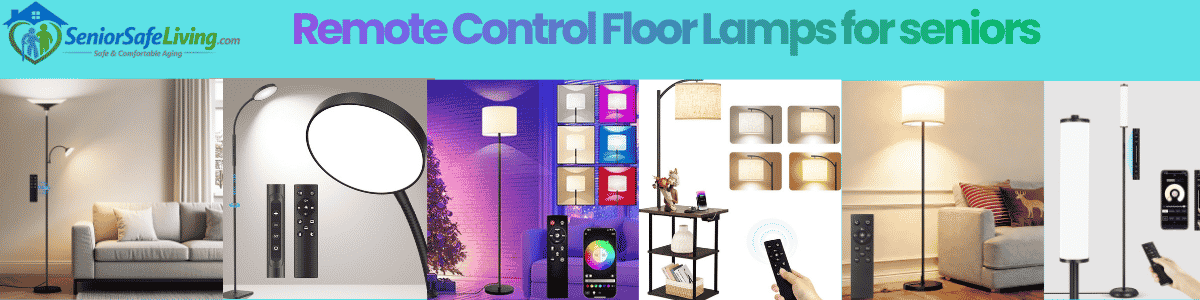
Remote Control Floor Lamps for Seniors
Remote Control Floor Lamps for Seniors: Safer, Easier Lighting for Aging Comfort
Remote Control Floor Lamps for seniors make everyday lighting easier, safer, and more comfortable by allowing older adults to turn lights on, adjust brightness, and change settings without standing up, bending, or walking through a dark room.
For many seniors, a lamp is not just a home decor item. It is part of daily comfort, reading, relaxation, safety, and independence. A simple floor lamp with a hard-to-reach switch may feel harmless to younger adults, but for an older person with arthritis, balance problems, low vision, or limited mobility, that same switch can become frustrating.
Imagine an elderly parent sitting in their favorite chair at night. The room becomes dim, but the lamp switch is behind the sofa. To turn it on, they need to stand up, steady themselves, reach around furniture, and possibly walk across a shadowy area. A remote control floor lamp for seniors removes that problem. The light can be controlled from the chair, bed, couch, or wheelchair.
Good lighting also matters for safety. The CDC reports that falls are a major injury risk for older adults, while the National Institute on Aging recommends improving home safety to reduce hazards. A remote-controlled lamp cannot prevent every accident, but it can help seniors avoid unnecessary movement in dark rooms and create a safer, more comfortable home environment.
Why Remote Control Floor Lamps for Seniors Are Worth Considering
Aging changes the way people interact with their homes. Small tasks that once felt automatic can become harder. Turning a lamp on and off may require bending, twisting, reaching, standing, or walking. These movements can be difficult for seniors with joint pain, back pain, weak legs, dizziness, vision changes, or balance concerns.
Remote control floor lamps for seniors solve a very practical problem: they put lighting control within reach. Instead of getting up every time the room feels too dark or too bright, the senior can use a remote from a comfortable position.
This is especially helpful in common situations such as:
- Reading in a recliner
- Watching TV in the evening
- Getting ready for bed
- Waking up during the night
- Sitting in a wheelchair
- Recovering after surgery
- Managing arthritis or hand weakness
- Living alone and wanting more control
The real value is not only convenience. It is confidence. When seniors can control their lighting easily, they may feel less dependent on family members or caregivers. They can brighten a room before standing, dim the lamp when resting, and turn it off from bed without walking across the room.
For adult children and caregivers, that small change can bring peace of mind. A well-placed floor lamp with remote control for seniors can reduce unnecessary movement, improve room visibility, and make the home feel more supportive.
How a Remote Control Floor Lamp for Seniors Works
A remote control floor lamp works like a regular floor lamp, but with added wireless control. Most models include a handheld remote that lets the user turn the lamp on or off. Many also allow brightness adjustment, color temperature changes, timer settings, and lighting modes.
Some remote control floor lamps use radio frequency remotes, which means the user does not always need to point the remote directly at the lamp. Others use infrared remotes, similar to a TV remote, which may require aiming toward the lamp. For seniors, radio frequency remotes are often easier because they are more forgiving.
Modern remote control floor lamps usually use LED bulbs or built-in LED panels. LED lighting is popular because it lasts longer, stays cooler, and uses less electricity than older bulb types. Many senior-friendly lamps also include dimming options, which can be useful for different times of day.
Common Remote Functions
Depending on the model, the remote may include several useful controls:
- Power button: Turns the lamp on or off.
- Brightness buttons: Raises or lowers light intensity.
- Color temperature buttons: Changes light from warm to cool.
- Reading mode: Offers brighter light for books, crafts, or close work.
- Night mode: Provides low, gentle light.
- Timer function: Turns the lamp off automatically after a set time.
- Memory function: Restores the last-used brightness or color setting.
For seniors, the best remote is not the one with the most buttons. The best remote is the one that is easiest to understand. Large buttons, strong contrast, simple labels, and a comfortable grip are more important than fancy features.
Floor Lamp With Remote Control for Seniors: Key Benefits
A floor lamp with remote control for seniors can improve comfort in several ways. It supports safer movement, easier daily routines, better reading conditions, and more independence at home.
Less Need to Stand Up
Standing up repeatedly can be tiring or risky for some seniors. A person with knee pain, hip weakness, or balance problems may need extra time to rise from a chair. If they only need to adjust the light, getting up should not be necessary.
Remote control allows seniors to control the lamp from where they are sitting. This is especially helpful for recliner chairs, lift chairs, beds, and wheelchairs.
Better Lighting Before Walking
A senior should not have to walk through a dim room to reach a lamp. With remote control, they can brighten the room before standing. This can help them see furniture, rugs, cords, pets, and other obstacles.
This is one of the biggest safety advantages of floor lamps with remote control for seniors. The light can come on before movement begins.
More Comfortable Reading
Reading often becomes harder with age because the eyes need more light. A dim lamp can cause eye strain, while harsh light can create glare. A dimmable remote control floor lamp lets seniors choose the brightness that feels right.
For reading books, newspapers, medication labels, mail, or craft instructions, adjustable brightness can make a real difference.
Easier Evening Routine
Many seniors follow a familiar evening routine: watch TV, read, take medication, turn off lights, and go to bed. A remote lamp makes this routine easier. They can dim the light while relaxing and turn it off without crossing the room.
Helpful for Caregivers
Caregivers often look for simple ways to improve home safety without making the space feel clinical. A remote control floor lamp looks like normal furniture, but it adds practical support.
It can be especially useful for seniors who resist medical-looking equipment but accept attractive home lighting.
Important Features to Look for in Floor Lamps With Remote Control for Seniors
Not every lamp is senior-friendly. Some lamps are stylish but unstable. Some have tiny remotes. Others are too bright, too complicated, or difficult to assemble. Before buying, focus on features that match senior needs.
Large and Simple Remote Buttons
The remote is the heart of the lamp. If the remote is confusing, the lamp becomes less useful. Seniors with arthritis, tremors, poor vision, or memory changes may struggle with tiny buttons or unclear symbols.
Look for a remote with:
- Large buttons
- Clear labels
- High contrast text
- Simple layout
- Comfortable size
- Few unnecessary controls
If the remote looks like a complicated TV controller, it may not be the best choice. Senior-friendly design should feel simple from the first use.
Stable Weighted Base
A floor lamp should stand firmly. A lightweight base may tip if bumped by a walker, cane, pet, or vacuum cleaner. This is especially important in smaller rooms where furniture is close together.
Choose a lamp with a wide or weighted base. Stability matters more than style when the lamp is used by an older adult.
Adjustable Brightness
Dimmable lighting is one of the most useful features. Seniors may need bright light for reading, medium light for conversation, and soft light for relaxing.
A lamp with multiple brightness levels gives the user more control. It also helps the same lamp work in different situations throughout the day.
Adjustable Color Temperature
Color temperature affects how light feels. Warm light feels cozy and relaxing. Cool light feels crisp and energizing. Natural white light often works well for reading and tasks.
For seniors, adjustable color temperature can be helpful because one setting may not work for every activity. Warm light may be better at night, while brighter natural white may be better for reading.
Flexible or Adjustable Lamp Head
A floor lamp that lets users direct light toward a book, chair, desk, or craft table is more useful than one fixed in a single direction. Adjustable lamp heads are especially helpful for reading and hobbies.
Look for gooseneck designs, swing arms, or adjustable heads that can be positioned without much force.
Easy Assembly
Some floor lamps require complicated assembly. For seniors living alone, this can be a problem. Choose a lamp that is easy to put together or plan for a family member to install it.
The lamp should also be easy to move into position without being too heavy to handle safely.
Memory Function
A memory function allows the lamp to return to the previous brightness and color setting when turned on again. This is useful because the senior does not need to adjust the lamp from scratch every time.
Timer Function
A timer can be helpful for seniors who fall asleep while reading or watching TV. The lamp can turn off automatically after a set period, saving energy and reducing the need to wake up to switch it off.
Choosing the Right Brightness for Senior Eyes
Older eyes often need more light than younger eyes. However, brighter is not always better. Too much brightness can create glare, especially for seniors with cataracts, dry eyes, macular degeneration, or light sensitivity.
The goal is balanced lighting. The lamp should be bright enough to support reading and movement, but soft enough to feel comfortable.
For Reading
Reading usually requires focused light. A remote control floor lamp with adjustable brightness and a flexible head is ideal. The light should shine on the page, not directly into the eyes.
A senior who reads every evening may benefit from a lamp with strong task lighting. If the lamp includes a reading mode, test whether it feels comfortable and does not create glare on glossy pages.
For Watching TV
Watching TV in complete darkness can strain the eyes. A dim floor lamp in the corner or behind a chair can create soft background lighting. This reduces contrast between the bright screen and dark room.
A remote control makes it easy to dim the lamp without interrupting the movie or show.
For Evening Relaxation
Warm, lower brightness is usually best for relaxing. It creates a calm atmosphere and may feel less harsh before bedtime.
For seniors who become sensitive to bright light at night, a low warm setting can be more comfortable than a ceiling light.
For Low Vision
Seniors with low vision may need stronger and more focused lighting. In this case, choose a lamp with higher brightness levels, adjustable direction, and minimal glare.
It may also help to use more than one light source in the room. A floor lamp can support reading, while another lamp or night light improves general room visibility.
Remote Control Floor Lamps and Fall Prevention at Home
Lighting is an important part of home safety for older adults. Poor lighting can make it harder to see rugs, steps, cords, furniture, pets, or uneven flooring. A remote control floor lamp helps by giving seniors easier access to light before they move.
This matters most in rooms where the senior spends a lot of time. A dark living room, bedroom corner, or reading area can create unnecessary risk.
Reducing Risky Reaching
Some traditional floor lamps have switches under the shade, on the pole, or on the cord. These may require reaching behind furniture or bending down. That movement can be uncomfortable and unsafe for seniors.
A remote removes the need for awkward reaching. The senior can keep the remote on a side table, chair pocket, nightstand, or walker basket.
Lighting the Room Before Standing
One of the safest habits is to turn on the light before getting up. With a remote, the senior can brighten the space while still seated. This is useful when standing from a recliner, sofa, or bed.
Good lighting gives the brain more visual information. The senior can see where the cane is, whether slippers are in place, and whether the walking path is clear.
Supporting Safer Nighttime Movement
A remote control floor lamp can help during nighttime wake-ups. For example, if a senior wakes up and needs to move from bed to bathroom, they can turn on the lamp first. This is better than walking across a dark room to reach a wall switch.
For best results, combine the floor lamp with motion sensor night lights in hallways and bathrooms. The floor lamp brightens the room, while night lights guide the walking path.
Best Rooms for Remote Control Floor Lamps
Placement matters. A good lamp in the wrong place may not help much. The best location depends on where the senior spends time and where lighting control is hardest.
Living Room
The living room is one of the best places for remote control floor lamps. Many seniors spend hours watching TV, reading, talking with family, or relaxing in a favorite chair.
Place the lamp near the chair or sofa, but not so close that the base becomes a tripping hazard. Keep the cord away from walkways. Use cord covers or secure the cord along the wall if needed.
Bedroom
A remote control floor lamp in the bedroom can help seniors turn on light before standing up. This is especially useful if the wall switch is far from the bed.
Place the remote on the nightstand in the same spot every night. Consistency helps seniors find it quickly.
Reading Corner
A reading corner needs focused, comfortable light. Choose a lamp with adjustable brightness and a flexible head. The senior should be able to aim the light at the page without moving the whole lamp.
Home Office or Hobby Area
Seniors who sew, paint, write, sort documents, solve puzzles, or use a computer may need strong task lighting. A floor lamp with remote control makes it easier to adjust brightness based on the activity.
Caregiver Room or Recovery Area
After surgery or illness, a senior may spend more time in one room. A remote control lamp can make recovery more comfortable by reducing unnecessary movement.
Safety Tips for Installing Floor Lamps Remote Control Models
Even the best floor lamps remote control models need safe installation. A poorly placed lamp can create clutter or tripping hazards. Use these tips to make the setup safer.
Keep the Cord Out of Walkways
Cords are one of the most common hazards. Never run a cord across an open walking path. Place the lamp near an outlet, and guide the cord along the wall.
If the cord must cross a small area, use a proper cord cover. Do not hide cords under loose rugs because that can create uneven flooring.
Place the Remote in a Predictable Spot
The remote should always be easy to find. Good places include:
- Nightstand
- Side table
- Chair pocket
- Remote holder
- Walker basket
- Bedside organizer
For seniors with memory challenges, label the remote clearly. A simple sticker that says “Lamp” can prevent confusion.
Avoid Narrow Walking Areas
Do not place the lamp where the senior may bump into it. Avoid tight spaces between furniture, doorways, or beside walking paths.
The base should sit flat on the floor and not interfere with canes, walkers, wheelchairs, or foot movement.
Test the Lamp at Night
After setting up the lamp, test it in real evening conditions. Sit where the senior sits. Use the remote. Check whether the light reaches the right area. Look for glare, shadows, and cord hazards.
Small adjustments can make the lamp much more useful.
Best Types of Remote Control Floor Lamps for Seniors
There are several types of remote control floor lamps. The right choice depends on the senior’s lifestyle, room layout, vision needs, and mobility level.
LED Torchiere Floor Lamps
Torchiere lamps shine light upward, spreading brightness across the room. They are useful for general room lighting and can make a dark living room feel more open.
For seniors, a remote-controlled torchiere can be helpful when the goal is to brighten the whole room before standing or walking.
Adjustable Reading Floor Lamps
Reading lamps focus light downward or toward a specific area. They are ideal for seniors who read books, magazines, medication labels, or newspapers.
Look for a flexible neck or adjustable head. This allows the user to direct the light without moving the lamp base.
Arc Floor Lamps
Arc lamps have a curved arm that extends over a chair or sofa. They can provide comfortable overhead-style lighting without installing ceiling fixtures.
However, choose carefully. Some arc lamps have large bases or long arms that may not work well in small rooms. Stability is very important.
Shelf Floor Lamps
Shelf floor lamps include small built-in shelves. They can hold books, glasses, a remote, or small decor items. For seniors, this can be useful if the shelf is stable and not overloaded.
Make sure the lamp does not become cluttered. Too many items on the shelf may make it unstable.
Smart Floor Lamps With Remote Control
Some lamps work with remotes, apps, and voice assistants. These can be convenient for tech-comfortable seniors. However, not every older adult wants app-based control.
If choosing a smart lamp, make sure it still works with a physical remote. A remote is often easier than opening an app.
What to Avoid When Buying Floor Lamps With Remote Control for Seniors
Some lamps look beautiful online but are not practical for senior use. Avoid these common problems.
Tiny Remote Buttons
A remote with small buttons can be difficult for seniors with vision issues or hand tremors. Choose clarity over style.
Unstable Base
A narrow, lightweight base may tip easily. Avoid lamps that feel wobbly or top-heavy.
Complicated Controls
Too many modes can confuse users. A senior-friendly lamp should offer useful settings without overwhelming the person.
Harsh Blue Light
Cool light can be useful for tasks, but harsh blue-white light may feel uncomfortable at night. Adjustable color temperature is better.
Short Power Cord
A short cord may force unsafe placement. Check cord length before buying, but still avoid running cords across walkways.
Hard-to-Reach Manual Switch
Even with remote control, the lamp should have a backup switch that is not too difficult to use. If the remote gets misplaced, the lamp should still be manageable.
Remote Control Floor Lamps for Seniors With Arthritis
Arthritis can make small movements painful. Twisting a switch, pressing a stiff button, or reaching behind a lamp may hurt the hands, wrists, shoulders, or back.
A remote control lamp can reduce those small but repeated strains. The best choice for arthritis should include a remote with soft-touch buttons, a comfortable size, and easy-to-read labels.
Also consider where the remote will be stored. If the senior has to stretch to reach it, the benefit is reduced. Keep it close to the natural resting position of the hand.
For seniors with severe arthritis, voice control may also help. However, a simple remote should still be available as a backup.
Remote Control Floor Lamps for Seniors With Low Vision
Low vision requires thoughtful lighting. The lamp should provide enough brightness, reduce shadows, and avoid glare. Seniors with vision loss may need more direct light for reading and more ambient light for safe movement.
Look for these features:
- High brightness range
- Dimmable control
- Adjustable lamp head
- Warm and natural light settings
- Remote with large, high-contrast buttons
- Stable placement near reading or activity areas
For low vision, one lamp may not be enough. A combination of ceiling lighting, floor lamps, table lamps, and night lights may work better. The goal is to reduce dark corners and strong shadows.
Remote Control Floor Lamps for Seniors With Limited Mobility
Seniors who use walkers, wheelchairs, canes, or lift chairs often need lighting that adapts to their position. A regular lamp may require movement that is inconvenient or unsafe.
A remote-controlled floor lamp allows the senior to stay seated while changing the light. This is helpful for wheelchair users, seniors recovering from hip or knee surgery, and people with muscle weakness.
When placing the lamp, consider mobility equipment. The base should not block wheelchair wheels or walker legs. The cord should not cross the path. The remote should be reachable from the normal seated position.
How to Help a Senior Use the Remote Comfortably
Buying the lamp is only the first step. The senior should feel comfortable using it every day. A little setup can prevent confusion.
Label the Remote
If the remote has many buttons, add simple labels. For example, use a sticker for “On,” “Off,” “Bright,” and “Dim.” Keep the labels large and easy to read.
Create a Remote Home
Choose one place where the remote always stays. This could be a side table tray, remote holder, or bedside organizer. Consistency matters.
Practice Together
Show the senior how to use the lamp in a relaxed way. Do not rush. Let them press the buttons and see what happens.
Remove Unused Complexity
If the lamp has many modes, focus only on the most useful ones. The senior does not need to memorize every feature.
Buying Checklist for the Best Remote Control Floor Lamp for Seniors
Before choosing a lamp, use this simple checklist:
- Does the remote have large, clear buttons?
- Can the senior turn the lamp on before standing?
- Is the base heavy and stable?
- Is the cord easy to keep out of the walkway?
- Does the lamp offer adjustable brightness?
- Does it have warm and natural light options?
- Is the lamp tall enough for the room?
- Can the light be aimed where needed?
- Is assembly simple?
- Does the lamp match the senior’s daily routine?
The best lamp is not always the most expensive. It is the one the senior will actually use comfortably.
Internal Link Suggestions
To improve SEO and keep readers engaged, add internal links to related articles on your website. Suggested internal link topics include:
- Best Reading Lamps for Seniors
- Motion Sensor Night Lights for Seniors
- Home Safety Products for Elderly People
- Fall Prevention Tips for Seniors
- Bedroom Safety Ideas for Seniors
- Living Room Ideas for Aging in Place
External Authority References
For stronger trust signals, you can reference respected senior safety and aging resources. These sources support the importance of fall prevention, home safety, and age-friendly environments:
- CDC Older Adult Falls Data
- CDC Older Adult Fall Prevention
- National Institute on Aging Fall Prevention Guide
- NIA Preventing Falls at Home
FAQ About Remote Control Floor Lamps for Seniors
Are remote control floor lamps good for seniors?
Yes. Remote control floor lamps are helpful for seniors because they make lighting easier to control without standing, bending, or reaching. They are especially useful for older adults with arthritis, low vision, balance concerns, or limited mobility.
What type of floor lamp is safest for elderly people?
The safest type has a sturdy weighted base, easy remote control, adjustable brightness, soft LED lighting, and a cord that can be kept away from walking paths. Stability and simple controls are more important than decorative style.
Do seniors need adjustable brightness in a floor lamp?
Yes. Adjustable brightness helps seniors use the same lamp for reading, relaxing, watching TV, and evening routines. A dimmable lamp gives better comfort and flexibility than a lamp with only one brightness level.
Where should a remote control floor lamp be placed for seniors?
Place it near a favorite chair, sofa, reading corner, bedside area, or activity space. It should be close enough to provide useful light but positioned so the base and cord do not create a tripping hazard.
Is a floor lamp with remote control for seniors better than a regular lamp?
For many seniors, yes. A floor lamp with remote control for seniors reduces unnecessary movement and makes it easier to turn the light on before standing. This can improve comfort and support safer daily routines.
What brightness should a senior-friendly floor lamp have?
A senior-friendly lamp should be bright enough for reading and daily tasks, but not so harsh that it causes glare. Dimmable LED lighting is ideal because the senior can adjust brightness based on the activity.
Can remote control floor lamps help prevent falls?
They can support fall prevention by improving visibility and reducing the need to walk in dark rooms. However, they should be combined with other safety steps, such as removing loose rugs, securing cords, clearing clutter, and improving bathroom safety.
Are smart floor lamps good for older adults?
Smart floor lamps can be good for tech-comfortable seniors, especially if they include voice control. However, a physical remote is still important because it is simple, fast, and does not require a phone or app.
Conclusion
Remote Control Floor Lamps for seniors are practical lighting solutions that support comfort, safety, and independence. They allow older adults to control brightness from a chair, bed, sofa, or wheelchair without unnecessary standing, bending, or walking through dim rooms.
The best senior-friendly lamp should have a stable base, large-button remote, adjustable brightness, comfortable color temperature, easy setup, and safe cord placement. For reading, choose a lamp with focused light and an adjustable head. For general room safety, choose a lamp that brightens the space before the senior stands up.
Small home upgrades can make daily life easier. A good remote control floor lamp may seem simple, but for a senior who values independence, it can turn a dark corner into a safer, calmer, and more comfortable space.
Final tip: Do not buy based on looks alone. Choose the lamp that your parent, grandparent, spouse, or elderly loved one can use confidently every single day.