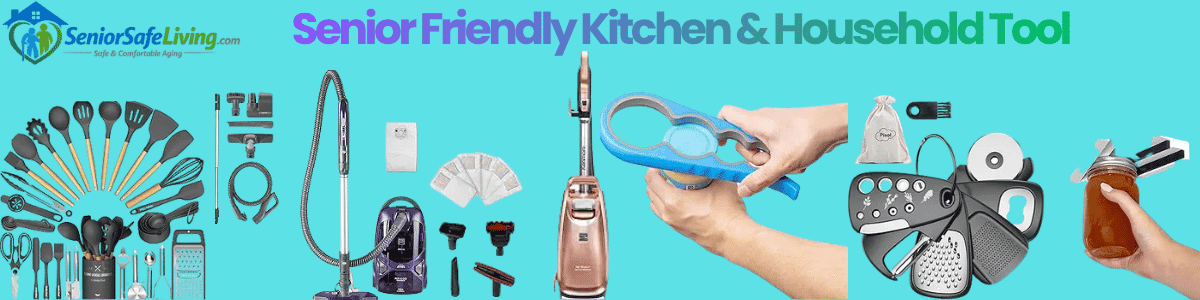
Senior Friendly Kitchen & Household Tool
Senior Friendly Kitchen & Household Tool Guide: Safer, Easier Living for Older Adults
Senior Friendly Kitchen & Household Tool products help older adults cook, clean, reach, grip, open, lift, and organize with less strain. The best tools support independence, reduce daily frustration, and make the home safer for seniors with arthritis, weak grip, low vision, balance concerns, or limited mobility.
For many older adults, the home is more than a place to live. It is where they feel independent, familiar, and in control. But ordinary daily tasks can become harder with age. Opening a tight jar may hurt the wrist. Carrying a heavy pot may feel risky. Bending to pick something up may create dizziness. Reaching for a high shelf may feel unsafe.
This is where senior-friendly tools can make a real difference. The right kitchen and household aids do not take independence away. They protect it. They help seniors keep doing familiar activities with more comfort, confidence, and safety.
Think of an elderly parent who still loves preparing breakfast but struggles to twist open a milk bottle. Or a grandparent who wants to sweep the floor but cannot bend comfortably. Or a spouse recovering from surgery who needs simple tools to make daily life easier. A thoughtfully chosen tool can turn a difficult task into a manageable one.
This guide explains what to look for, which tools matter most, how to choose senior-friendly designs, and how to build a safer home without making it feel like a hospital.
Why Senior Friendly Kitchen & Household Tool Products Matter
Aging changes how the body responds to everyday movement. Grip strength may decrease. Joints may feel stiff. Vision may become less sharp. Balance may become less reliable. Reaction time may slow down. None of this means a senior cannot live independently, but it does mean the home should work with the person, not against them.
Senior Friendly Kitchen & Household Tool products matter because they reduce unnecessary effort. A good tool helps an older adult avoid painful twisting, risky bending, heavy lifting, awkward reaching, and unsafe climbing.
These tools are especially useful for seniors who experience:
- Arthritis in the hands, wrists, shoulders, knees, or back
- Weak grip strength when opening jars, bottles, cans, or packages
- Low vision while reading labels, measuring ingredients, or using controls
- Limited mobility after surgery, illness, or injury
- Balance concerns when bending, turning, or carrying objects
- Fatigue during cooking, cleaning, or household chores
- Memory challenges that make simple, visible tools more helpful
The best tools do not make seniors feel helpless. They make tasks feel normal again. That is the emotional value many product lists miss.
What Makes a Kitchen or Household Tool Senior-Friendly?
A senior-friendly tool is not just a regular product with a larger handle. It should solve a specific daily problem while being easy, safe, and comfortable to use.
Good design becomes even more important when a person has arthritis, tremors, poor vision, back pain, or reduced balance. A tool that looks useful online may become frustrating if it is too heavy, too complicated, slippery, or difficult to clean.
Easy Grip Design
Handles should be wide, soft, textured, and comfortable. Thin metal handles can be painful for seniors with arthritis. A thicker handle spreads pressure across the hand and requires less squeezing force.
Easy-grip designs are helpful for utensils, peelers, knives, jar openers, dusters, mops, and garden-style household tools.
Lightweight Construction
Heavy tools can increase fatigue and risk. A senior may avoid cooking or cleaning if the tools feel too heavy to manage. Lightweight cookware, compact appliances, and easy-lift household tools can reduce strain.
However, lightweight should not mean flimsy. The tool should feel stable and well-made.
Non-Slip Materials
Non-slip grips, rubber bases, suction feet, and textured handles help prevent accidents. In kitchens, this is especially important because hands may be wet, oily, or tired.
Non-slip cutting boards, jar openers, mixing bowls, and floor mats can make everyday tasks safer.
Simple Controls
Buttons should be large, visible, and easy to press. Avoid products with tiny switches, confusing digital menus, or complicated settings unless the senior is comfortable with technology.
For seniors with low vision, high-contrast labels and tactile buttons are very helpful.
Easy Cleaning
If a tool is hard to clean, it may not be used. Seniors benefit from dishwasher-safe parts, smooth surfaces, removable components, and simple designs that do not trap food.
Safe Storage
Senior-friendly tools should be easy to store at waist or chest height. If a tool requires climbing, deep bending, or reaching into high cabinets, it becomes less practical.
Best Senior-Friendly Kitchen Tools for Safer Cooking
The kitchen is one of the most important rooms to adapt because it combines heat, water, sharp objects, heavy items, slippery floors, and frequent movement. The right tools can make cooking safer and more enjoyable.
Electric Jar Openers
Opening jars is one of the most common frustrations for seniors. Tight lids require grip strength, wrist rotation, and pressure. For someone with arthritis, this can be painful.
An electric jar opener does most of the twisting automatically. It can help seniors open pasta sauce, jam, pickles, peanut butter, and other sealed containers without straining the hands.
Look for a model that is:
- Simple to operate
- Compatible with different jar sizes
- Easy to clean
- Stable during use
- Not too heavy
Automatic Can Openers
Manual can openers require squeezing and turning, which can be difficult for seniors with hand pain. An automatic can opener reduces twisting and makes food preparation easier.
Choose a smooth-edge can opener if possible. It leaves safer edges and reduces the risk of cuts.
Easy-Grip Utensils
Forks, spoons, and knives with larger handles are easier to hold. They are useful for seniors with arthritis, tremors, Parkinson’s symptoms, or weak grip.
Some adaptive utensils have angled handles or weighted designs. These may help seniors who struggle with hand control, but the best choice depends on the individual.
Ergonomic Kitchen Knives
Cutting vegetables, fruit, bread, or meat can be challenging when grip strength decreases. Ergonomic knives with comfortable handles can reduce wrist strain and improve control.
For seniors, safety matters more than speed. A knife should feel secure in the hand and should not require excessive force.
Non-Slip Cutting Boards
A cutting board that slides across the counter is dangerous. Non-slip cutting boards stay in place and help seniors cut food more safely.
Some boards include raised edges, corner grips, or food spikes that hold ingredients steady. These can be helpful for one-handed food preparation.
Lightweight Cookware
Heavy pots and pans can be difficult to lift, especially when filled with water, soup, or pasta. Lightweight cookware reduces strain on wrists, shoulders, and backs.
Choose cookware with two handles when possible. Two handles distribute weight more evenly and give the senior better control.
Easy-Read Measuring Cups and Spoons
Small measurement markings can be hard to see. Easy-read measuring tools with large numbers and strong contrast help seniors cook more accurately.
This is especially helpful for seniors with low vision or those following special diets.
Household Tools That Make Daily Chores Easier
Senior-friendly household tools should reduce bending, reaching, pulling, lifting, and twisting. The goal is not to remove all activity, but to make routine chores safer and less exhausting.
Reacher Grabber Tools
A reacher grabber is one of the most useful household tools for seniors. It helps pick up dropped items, reach shelves, grab laundry, retrieve small objects, and avoid unsafe bending.
A good reacher should have a comfortable handle, lightweight frame, strong gripping jaws, and a length that fits the user’s height.
It can be used for:
- Picking up keys or clothing from the floor
- Reaching items from low shelves
- Grabbing lightweight objects from higher places
- Retrieving mail from the floor
- Reducing bending after hip or knee surgery
Long-Handled Dustpan and Broom
Bending down to use a short dustpan can be uncomfortable and risky. A long-handled dustpan allows seniors to clean small messes while standing upright.
Pair it with a lightweight broom for a simple senior-friendly cleaning setup.
Lightweight Cordless Vacuum
Traditional vacuums can be heavy and difficult to maneuver. A lightweight cordless vacuum may be easier for quick cleaning, especially in small homes or apartments.
Choose one that is easy to empty, not too loud, and light enough for the senior to manage comfortably.
Long-Handled Scrub Brushes
Scrubbing tubs, tiles, floors, or corners often requires bending or kneeling. Long-handled scrub brushes reduce strain and help seniors clean more safely.
They are useful in bathrooms, kitchens, laundry areas, and entryways.
Easy-Turn Door Knob Grips
Round doorknobs can be difficult for seniors with arthritis. Door knob grips make knobs larger and easier to turn. Lever-style handles may be even better when possible.
Large-Button Remote Controls
Household comfort includes more than cleaning. Seniors may benefit from large-button remotes for TVs, lamps, fans, and adjustable devices. Simple controls reduce frustration and support independence.
Senior-Friendly Tools for Arthritis and Weak Grip
Arthritis can turn small household tasks into painful challenges. Twisting, gripping, pinching, squeezing, and lifting may become difficult. The right tools help protect joints and reduce hand strain.
Soft-Handled Peelers
A standard peeler can be thin and uncomfortable. A soft-handled peeler requires less grip pressure and gives better control.
Choose a peeler with a wide handle and sharp blade. A dull blade requires more force and can increase risk.
Bottle and Lid Openers
Small bottle caps can be surprisingly difficult. A multi-size opener can help seniors open water bottles, soda bottles, medicine bottles, and condiment containers.
Look for non-slip rubber material and a handle that gives leverage.
Rocker Knives
A rocker knife allows users to cut food with a rocking motion instead of a traditional sawing motion. This can help seniors who have limited hand strength or one-handed use needs.
Adaptive Scissors
Spring-loaded scissors open automatically after each cut. This reduces hand fatigue when cutting paper, packaging, herbs, or light materials.
Easy-Squeeze Spray Bottles
Cleaning spray bottles can be painful for seniors with hand arthritis. Easy-squeeze or continuous-spray bottles require less repeated pressure.
For safety, always label cleaning products clearly and avoid mixing chemicals.
Kitchen Safety Tools for Seniors Who Want to Age in Place
Aging in place means living safely and comfortably at home for as long as possible. The kitchen plays a major role because meals are part of daily independence.
The goal is to reduce risk without removing the joy of cooking.
Anti-Fatigue Kitchen Mats
Standing for long periods can be tiring. A cushioned anti-fatigue mat may help seniors feel more comfortable while preparing meals or washing dishes.
Choose a mat with beveled edges and non-slip backing. Avoid thick, curled, or loose mats that can become tripping hazards.
Stove Knob Covers or Safety Knobs
For seniors with memory changes, stove safety deserves extra attention. Stove knob covers or safety knobs can help prevent accidental burner activation.
Caregivers should consider the senior’s cognitive ability, cooking habits, and risk level before choosing stove safety tools.
Automatic Shut-Off Devices
Some devices can shut off appliances after a set time or when unusual heat is detected. These can be useful in homes where forgetting the stove or iron is a concern.
Cut-Resistant Gloves
Cut-resistant gloves can protect hands during slicing, peeling, grating, or chopping. They are especially useful for seniors who still enjoy cooking but have slower reaction time or reduced hand control.
Non-Slip Mixing Bowls
Mixing bowls with rubber bases stay more stable on the counter. This helps seniors stir, whisk, or mix without chasing the bowl around the surface.
Tools for Seniors With Low Vision
Low vision can make everyday kitchen and household tasks harder. Small labels, low-contrast buttons, and poor lighting can create mistakes and frustration.
Senior-friendly tools for low vision should be easy to see, easy to feel, and easy to use.
Large-Print Labels
Large-print labels can help seniors identify spices, pantry items, medications, cleaning products, and appliance settings.
Use high contrast, such as black text on white labels. Keep labels simple and avoid clutter.
Talking Kitchen Scales and Measuring Tools
Talking tools can be helpful for seniors who struggle to read small numbers. A talking kitchen scale or large-display timer may support safer cooking and accurate measuring.
High-Contrast Cutting Boards
A white onion on a white cutting board can be hard to see. High-contrast cutting boards make food easier to identify. Use dark boards for light foods and light boards for dark foods.
Large-Display Timers
A timer with large numbers and a loud but pleasant alert can prevent overcooking and reduce stress. Magnetic timers can be placed on refrigerators or metal surfaces at eye level.
Motion Sensor Lights
Lighting matters in kitchens, hallways, closets, and laundry areas. Motion sensor lights can help seniors see without searching for switches.
Under-cabinet lighting is also useful because it brightens the counter where food preparation happens.
Senior-Friendly Household Tools for Bathroom and Laundry Areas
The kitchen is important, but household tools in bathrooms and laundry rooms also support safety and independence.
Long-Handled Bath Sponges
A long-handled sponge helps seniors wash without bending or twisting too much. It can be useful for feet, legs, and back.
Non-Slip Bath Mats
Bathrooms are high-risk areas because of wet floors. Non-slip mats inside and outside the shower can improve stability. Choose mats that stay flat and do not curl.
Easy-Grip Laundry Baskets
Heavy laundry baskets can be awkward to carry. Lightweight baskets with large handles or rolling laundry carts can reduce strain.
Detergent Dispensers
Large detergent bottles are heavy and slippery. A pump dispenser or smaller refillable bottle can make laundry easier.
Long-Handled Shoe Horns
A long-handled shoe horn helps seniors put on shoes without bending deeply. This is especially helpful for those with hip, knee, or back pain.
Organizing the Home Around Senior-Friendly Tools
A tool is only helpful if it is easy to find and easy to reach. Organization matters as much as the product itself.
Keep Daily-Use Items at Waist Height
Frequently used items should be stored between shoulder and knee height. This reduces the need to climb, stretch, or bend.
In the kitchen, place daily dishes, mugs, cookware, and pantry staples within easy reach.
Create Task Zones
Group tools by activity. For example, keep jar openers, can openers, cutting boards, and utensils near the food prep area. Keep cleaning tools near the place they are used.
This reduces unnecessary walking and searching.
Use Open Bins and Clear Containers
Clear containers make items easier to identify. Open bins are easier than deep cabinets for seniors who struggle with bending or reaching.
Label Important Items
Simple labels reduce confusion. This is helpful for pantry goods, cleaning supplies, medications, remote controls, and appliance settings.
Remove Tools That Are No Longer Safe
Old knives, heavy pans, cracked cutting boards, slippery rugs, unstable stools, and frayed cords should be replaced or removed.
How to Choose Tools for Elderly Parents Without Making Them Feel Dependent
Buying tools for an elderly parent can be sensitive. Some seniors resist anything that makes them feel old, weak, or dependent. The way you introduce the tool matters.
Instead of saying, “You need this because you cannot do things anymore,” try saying, “This makes cooking easier,” or “This tool saves your hands,” or “I bought one because it is more comfortable.”
Focus on comfort and convenience, not limitation.
Choose Normal-Looking Products
Many senior-friendly tools look modern and attractive. A stylish jar opener, ergonomic knife, or lightweight vacuum may feel less clinical than medical-looking equipment.
Start With One or Two Tools
Do not overwhelm the senior with a full house makeover in one day. Start with the task that causes the most frustration.
If opening jars is the problem, start with a jar opener. If bending is the issue, start with a reacher grabber. Small wins build trust.
Let the Senior Test the Tool
The best product is the one the person will actually use. Let them try it. Ask what feels comfortable. Watch for difficulty without taking over too quickly.
Respect Existing Routines
Seniors often have routines built over decades. A tool should fit into the routine, not force a completely new one.
Common Mistakes to Avoid When Buying Senior-Friendly Tools
Many people buy helpful-looking products that end up unused in a drawer. Avoid these mistakes.
Buying Tools That Are Too Complicated
A product with too many settings may create frustration. Simple usually wins.
Ignoring Weight
A tool may look ergonomic but still be too heavy. Consider whether the senior can lift, hold, and clean it comfortably.
Choosing Poor-Quality Plastic
Cheap materials may break, slip, or feel unstable. Durable tools are safer and more reliable.
Forgetting Storage
If a tool is hard to store, it may not be used. Choose items that fit the senior’s kitchen and household layout.
Assuming One Product Works for Everyone
Every senior is different. Someone with arthritis may need soft grips. Someone with low vision may need large print. Someone with balance issues may need long-handled tools and better lighting.
Buying Checklist for Senior Friendly Kitchen & Household Tool Products
Before buying, use this checklist to make a smarter choice:
- Does the tool solve a real daily problem?
- Is it easy to grip?
- Is it lightweight enough?
- Does it reduce bending, twisting, or reaching?
- Does it have non-slip features?
- Are the buttons or controls large and simple?
- Is it easy to clean?
- Is it easy to store within reach?
- Does it feel stable during use?
- Can the senior use it without help?
- Does it match the senior’s vision, grip, and mobility needs?
- Will it make the task safer, not just faster?
A tool that checks most of these boxes is more likely to be useful long term.
Best Starter Tool Kit for Seniors Living at Home
If you are building a basic senior-friendly home setup, start with practical tools that solve common problems. You do not need to buy everything at once.
Kitchen Starter Tools
- Electric jar opener
- Automatic can opener
- Easy-grip utensils
- Non-slip cutting board
- Lightweight cookware
- Large-print measuring cups
- Soft-handled peeler
- Large-display kitchen timer
Household Starter Tools
- Reacher grabber
- Long-handled dustpan
- Lightweight cordless vacuum
- Motion sensor lights
- Door knob grips or lever handles
- Long-handled shoe horn
- Rolling laundry cart
- Large-button remote control
This starter kit covers the most common areas: gripping, opening, reaching, cleaning, lighting, and carrying.
Internal Link Suggestions
To strengthen SEO and keep readers engaged, add internal links to related articles on your website. Suggested internal link topics include:
- Best Kitchen Tools for Seniors
- Arthritis-Friendly Kitchen Gadgets
- Home Safety Products for Seniors
- Motion Sensor Night Lights for Seniors
- Remote Control Floor Lamps for Seniors
- Fall Prevention Tips for Seniors
- Aging in Place Home Safety Checklist
- Low Vision Aids for Seniors
External Authority References
For stronger trust and E-E-A-T signals, you can reference respected senior safety, fall prevention, and arthritis resources:
- CDC Older Adult Fall Prevention
- National Institute on Aging: Preventing Falls at Home
- U.S. Consumer Product Safety Commission: Older Adult Safety
- Arthritis Foundation: Adapting Your House When You Have Arthritis
FAQ About Senior-Friendly Kitchen and Household Tools
What are senior-friendly kitchen and household tools?
Senior-friendly kitchen and household tools are products designed to make daily tasks easier, safer, and less painful for older adults. They often include easy-grip handles, lightweight materials, non-slip bases, large buttons, and simple controls.
Which kitchen tools are most useful for seniors with arthritis?
The most useful kitchen tools for seniors with arthritis include electric jar openers, automatic can openers, soft-handled peelers, ergonomic knives, easy-grip utensils, rocker knives, lightweight cookware, and non-slip cutting boards.
How can household tools help seniors live independently?
Household tools can help seniors live independently by reducing difficult movements such as bending, reaching, gripping, twisting, lifting, and carrying. They make daily routines more manageable and can reduce the need for constant assistance.
What should I look for when buying tools for elderly parents?
Look for tools that solve a specific problem, feel comfortable in the hand, are easy to clean, have simple controls, and reduce strain. Avoid tools that are heavy, complicated, slippery, or difficult to store.
Are electric kitchen tools better for seniors?
Electric kitchen tools can be better for seniors who have arthritis, weak grip strength, or hand pain. Automatic jar openers, can openers, and food choppers can reduce manual effort. However, they should still be easy to operate and clean.
Can senior-friendly household tools reduce fall risk?
They can help reduce fall risk by limiting unsafe bending, climbing, and reaching. Tools like reacher grabbers, long-handled dustpans, motion lights, and rolling carts can support safer movement around the home.
What is the best tool for seniors who cannot bend easily?
A reacher grabber is one of the best tools for seniors who cannot bend easily. It helps pick up objects from the floor, retrieve lightweight items, and reduce strain on the back, knees, and hips.
Are senior-friendly tools only for disabled seniors?
No. These tools are useful for many older adults, even those who are active and independent. They can prevent strain, make chores easier, and help seniors continue familiar routines with more comfort.
Conclusion
Senior Friendly Kitchen & Household Tool products are not just convenient gadgets. They are practical supports that help older adults cook, clean, organize, reach, grip, open, and move around the home with more confidence.
The best tools are simple, comfortable, stable, lightweight, easy to clean, and designed around real senior needs. For the kitchen, start with jar openers, can openers, easy-grip utensils, non-slip cutting boards, and lightweight cookware. For the rest of the home, consider reacher grabbers, long-handled cleaning tools, motion lights, large-button remotes, and rolling laundry carts.
Small changes can protect independence. A senior who can open a jar without pain, clean without bending, read labels clearly, and reach items safely may feel more capable in their own home.
Final tip: Start with the task that causes the most frustration. One well-chosen tool can make daily life easier today and create a safer, more supportive home for the future.