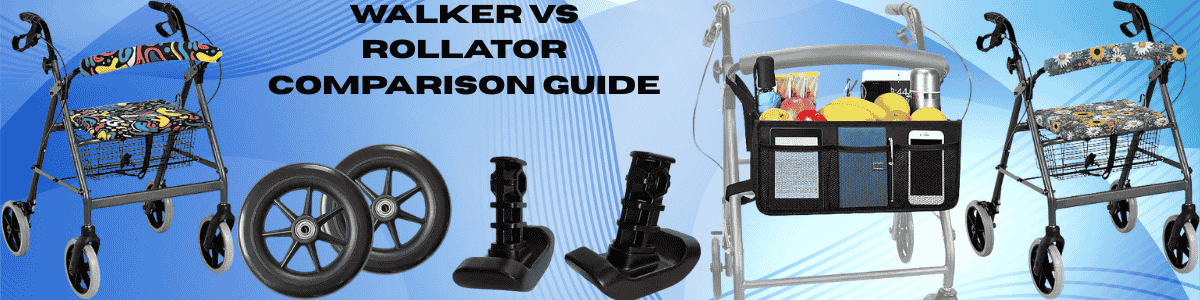
Walker vs Rollator Comparison Guide
Walker vs Rollator Comparison Guide (2026 Complete Guide)
Choosing the right mobility aid is one of the most important decisions for seniors, caregivers, and family members. Two of the most popular walking support devices are walkers and rollators — but they serve very different mobility needs.
This comprehensive comparison will help you understand:
✔ What walkers are
✔ What rollators are
✔ Key differences
✔ Pros and cons
✔ How to choose the right one
✔ Safety and usage tips
✔ Frequently asked questions
🦯 What Is a Walker?
A walker is a stable mobility aid with a rectangular frame and no or few wheels.
Walkers provide maximum support and are ideal for seniors who need balance assistance, have limited strength, or are recovering from surgery.
Walkers are:
-
Simple in design
-
Highly stable
-
Easy to use
-
Often foldable for storage
🦽 What Is a Rollator?
A rollator is a mobility aid with four wheels, hand brakes, and usually a built‑in seat and basket.
Rollators are designed for moderate balance support, ease of movement, and greater comfort — especially outdoors.
Rollators are:
-
Easier to push
-
Equipped with brakes
-
Built‑in seats for resting
-
Often come with storage pouches
✅ Pros and Cons
✔ Walker Pros
-
Provides maximum stability
-
Ideal for seniors with severe balance issues
-
Simple and durable
-
Less expensive
❌ Walker Cons
-
Must be lifted while moving (less convenient)
-
Not ideal for long outdoor walks
-
No built‑in seat
✔ Rollator Pros
-
Easy to move without lifting
-
Built‑in seat for resting
-
Hand brakes increase safety
-
Storage for personal items
❌ Rollator Cons
-
Slightly less stable than walkers
-
Requires brake control/hand strength
-
Wheels may slip on uneven surfaces
🧠 When to Choose a Walker
Choose a walker if:
✔ Balance issues are moderate to severe
✔ The senior has weak leg muscles
✔ The user primarily walks indoors
✔ Stability is more important than mobility
✔ The senior cannot operate hand brakes
Typical users:
-
Post‑surgery recovery
-
Severe arthritis
-
Poor balance
🧠 When to Choose a Rollator
Choose a rollator if:
✔ The senior can control brakes
✔ They want to walk longer distances
✔ Outdoor mobility is important
✔ They need a seat to rest
✔ A basket for storage is helpful
Typical users:
-
Mild to moderate balance issues
-
Active seniors
-
Those who walk outdoors regularly
🚶 Walker vs Rollator: Everyday Use
Indoor Use
-
Walkers: Excellent
-
Rollators: Good (wide clearance needed)
Outdoor Use
-
Walkers: Limited
-
Rollators: Excellent (smooth motion)
Long Walking Distances
-
Walkers: Harder
-
Rollators: Comfortable with seat
🔒 Safety Tips for Walkers and Rollators
✔ Check brakes before use
✔ Adjust handles to wrist level
✔ Inspect rubber tips regularly
✔ Wear non‑slip footwear
✔ Keep pathways clear of clutter
Proper use prevents falls and improves confidence.
🧠 Frequently Asked Questions (FAQ)
❓ Which is better: walker or rollator?
It depends on mobility needs:
-
Walker → Maximum stability
-
Rollator → Smooth movement + rest option
❓ Can rollators be used indoors?
Yes, but ensure the path is wide enough and free of obstacles.
❓ Do walkers require assembly?
Most walkers are tool‑free or minimal assembly and easy to fold.
❓ Are rollators covered by Medicare?
Medicare Part B may cover medically necessary rollators with a doctor’s prescription.
❓ Can seniors use rollators on uneven surfaces?
Yes, but rollators with larger wheels perform better on uneven terrain.
❓ How do I adjust a walker or rollator height?
Stand upright; handles should align with your wrist crease for optimal comfort.
🧠 Final Thoughts
Both walkers and rollators are valuable mobility aids — but they serve different purposes:
-
Walkers are best when stability and balance are top priorities.
-
Rollators are ideal when comfort, ease of movement, and long‑distance walking matter.
Choosing the right option supports a safer, more confident lifestyle for seniors — whether at home or on the go.